Material library
Stone reference & guides
Browse live stone reference pages and read guides on choosing, using, and caring for the material.
3 reference pages live · Stone
Guides
Stone guides & comparisons
In-depth articles on choosing, using, and caring for stone — with links to individual material reference pages.
From geology to stone tile
Limestone, slate, and travertine start in geology — not in a showroom. Here is how rock types differ before you buy.
Read guide →Concrete, microcement, and terrazzo — what the differences actually are
"Concrete look" covers several different materials with very different installation methods and long-term behaviour. Here is what separates poured concrete from microcement and terrazzo.
Read guide →Engineered quartz, sintered stone, and solid surface explained
None of these are geological materials — they are manufactured to solve specific problems that natural stone does not. Knowing what each is actually made from clarifies why they behave so differently.
Read guide →How to care for natural stone floors day to day
Travertine, limestone, and slate each fail in different ways when cared for like a ceramic tile floor. Here is what actually protects them long term.
Read guide →Large-format porcelain panels — pros and cons
Fewer grout lines and a slab-like look come with real handling and installation trade-offs most homeowners never see before the quote arrives.
Read guide →Polished concrete floors — what to expect day to day
Polished concrete is durable and low-maintenance, but it is not maintenance-free, and cracking behaviour surprises a lot of first-time owners.
Read guide →Porcelain tile vs natural stone
Porcelain is factory-made, low-porosity, and consistent. Natural stone is geological — unique, porous to varying degrees, and often more expensive to install. Which fits your room?
Read guide →Granite vs quartzite countertops
Both are hard, natural, and heat-resistant — but they are geologically different, and "quartzite" is one of the most mislabeled stones sold at fabricator showrooms.
Read guide →Zellige tile — what to know before you buy
Handmade Moroccan zellige looks nothing like the machine-made "zellige-look" tile most retailers actually sell. Here is the real difference and why it matters for the quote.
Read guide →Microcement vs tile for bathrooms
Microcement gives a seamless, grout-free bathroom look, but it behaves very differently from tile in wet zones — know the trade-offs before ripping out existing tile.
Read guide →Engineered quartz vs natural stone countertops
Engineered quartz never needs sealing and resists staining better than most natural stone — but it is not heat-proof, and it is not natural stone, whatever the showroom display implies.
Read guide →
Reference
Stone material pages
Canonical pages with origin, character, best uses, care, and images — one surface at a time.
 Stone
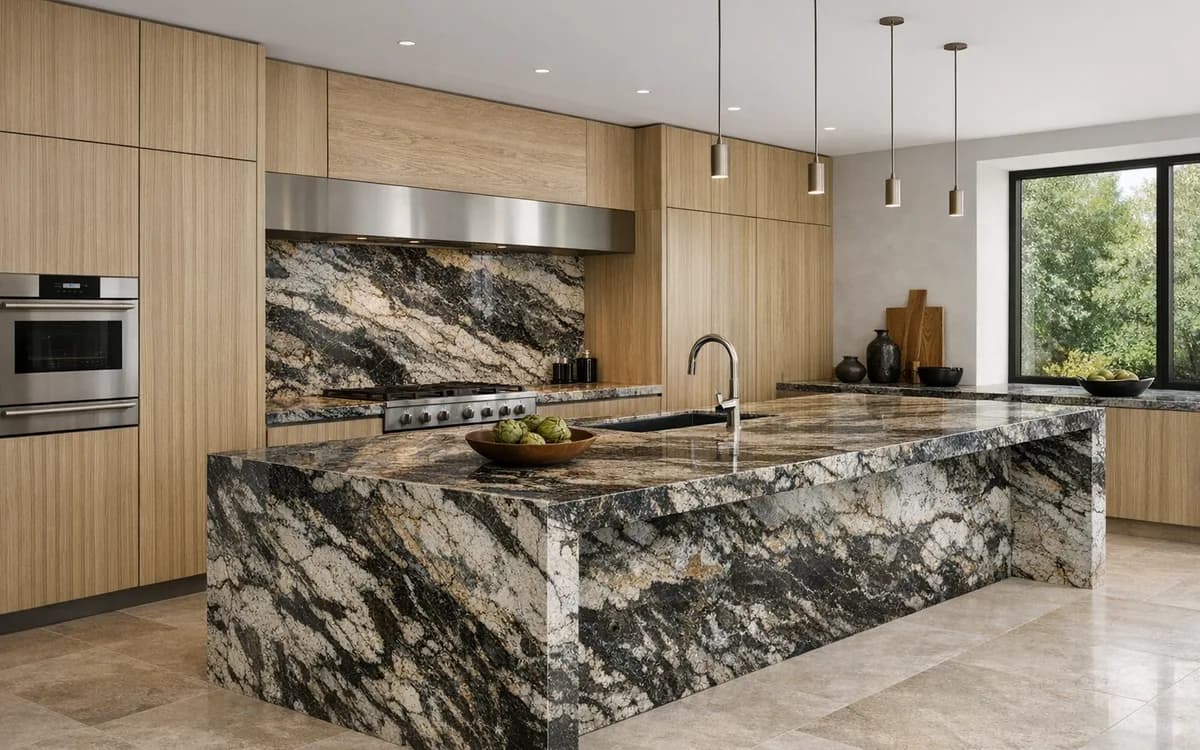
StoneGranite
Quarried worldwide; major sources include Brazil, India, Norway, and China
Granite is an igneous rock formed from cooled magma, prized for its hardness and resistance to scratching. It is a practical choice for kitchen countertops where durability matters.
View material →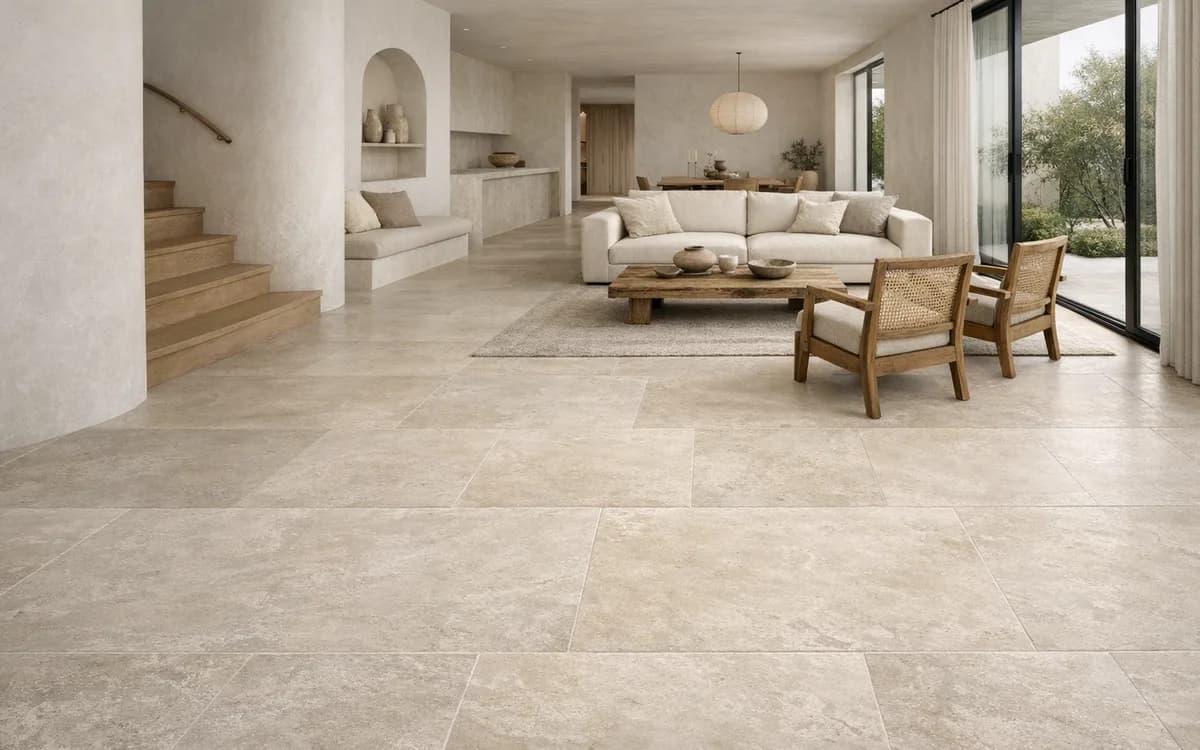 Stone
StoneLimestone
Quarried widely across Europe, the Middle East, and North America; notable sources includ…
Limestone is a sedimentary rock composed mainly of calcite. It is chosen for its soft, matte appearance and the warm, earthy tones it brings to interior floors.
View material →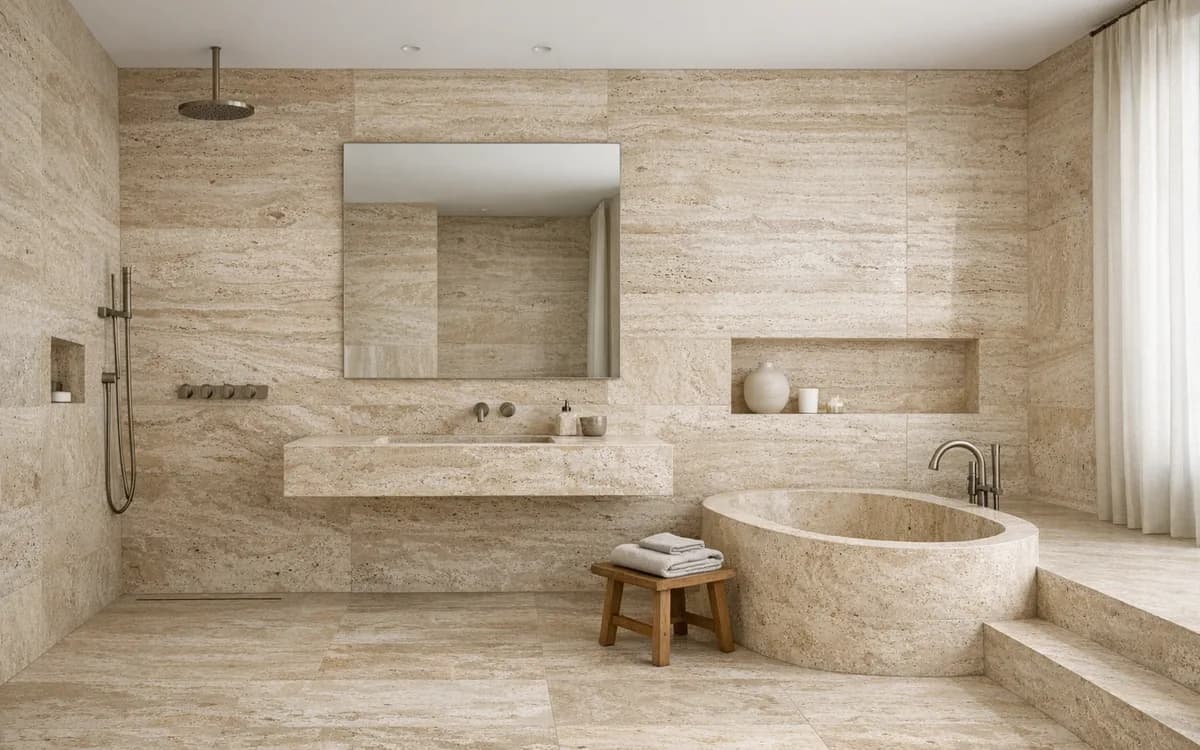 Stone
StoneTravertine
Quarried primarily in Italy (Tivoli), Turkey, Iran, and Mexico
Travertine is a sedimentary limestone formed by mineral springs, recognised by its natural voids and warm, banded surface. People choose it for its earthy texture and softer appearance compared to polished marble.
View material →