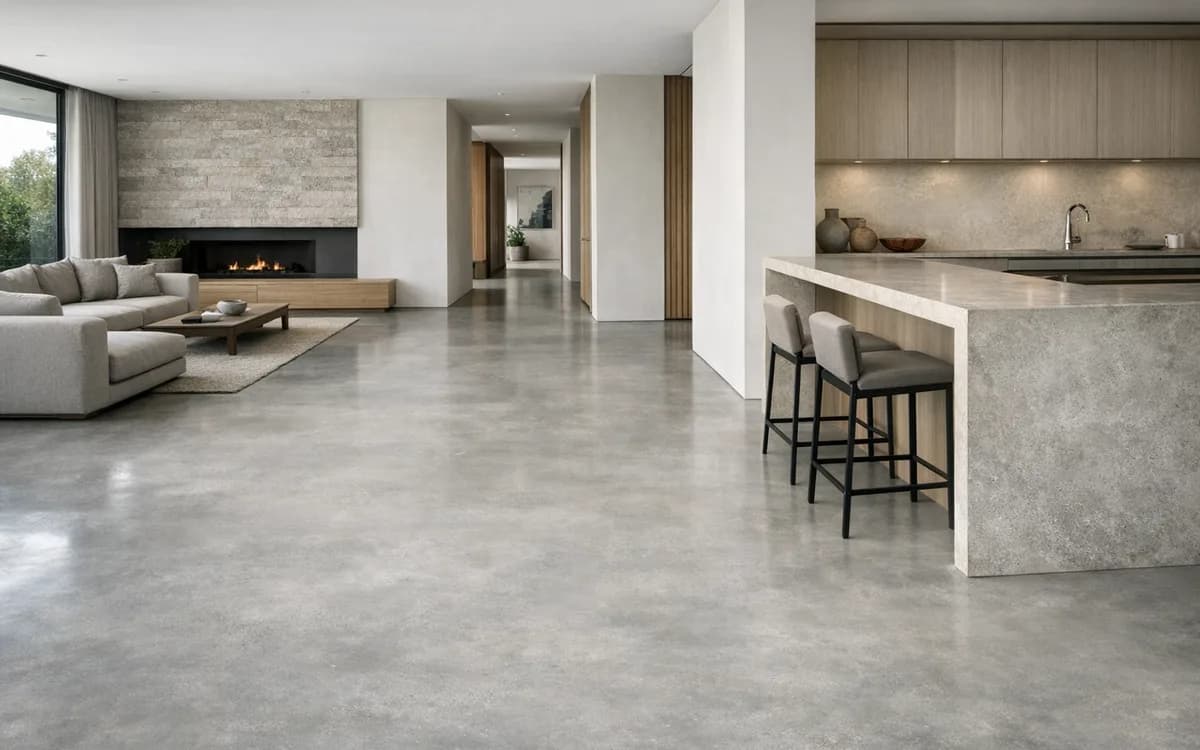
Polished concrete is ground with progressively finer diamond abrasives to expose and smooth the aggregate, then typically treated with a penetrating densifier and sometimes a topical sealer. The result is hard-wearing and easy to sweep and mop, which is why it is popular in open-plan and high-traffic homes.
It is not maintenance-free: sealers wear thinner over years of foot traffic and need periodic reapplication, and the surface can still stain from oil, wine, or acidic spills if the sealer has worn through in that spot.
Cracking is normal, to a point
Concrete slabs develop hairline cracks as they cure and settle — this is expected behaviour, not a construction defect, and control joints are typically cut into the slab specifically to guide where cracking happens. Larger, moving, or widening cracks are a different matter and should be assessed by a structural professional.
Radiant heating systems embedded in the slab change its expansion behaviour — confirm with your installer how this affects long-term crack patterns for your specific setup before finalising the floor plan.
Comfort underfoot
Concrete is a hard, cold surface without added heating — rugs in seating areas and underfloor heating are common solutions in colder climates. Factor this into the budget alongside the flooring cost itself if comfort matters as much as the look.