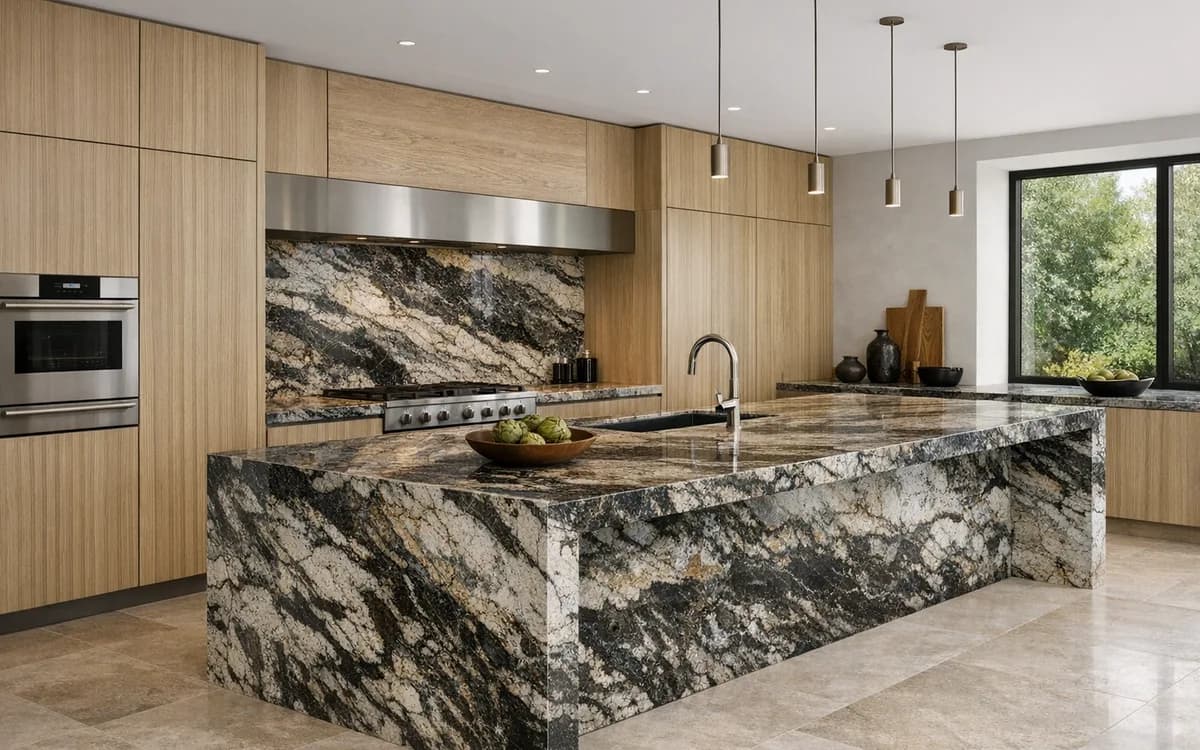
Granite is an igneous rock, cooled and crystallised from molten magma — it is a mix of quartz, feldspar, and mica, giving it the familiar speckled grain pattern. True quartzite is metamorphic, formed when sandstone is subjected to heat and pressure that fuses its quartz grains into a very hard, dense stone with a more directional, often streaky pattern.
Both are significantly harder and more scratch-resistant than marble or limestone, and both are generally more forgiving of acid exposure than calcite-based stones — though sealing is still recommended for both, since hardness does not equal zero porosity.
The mislabeling problem
"Soft quartzite" or "dolomitic marble sold as quartzite" is a well-documented issue in the stone trade — some stones marketed as quartzite are actually closer to marble in hardness and etch resistance because they contain more calcite than true quartzite should. Ask your fabricator for the material's actual mineral composition or a scratch/acid test on a sample piece before committing, especially for kitchen countertops.
A simple at-home check: a few drops of vinegar on an inconspicuous edge should not visibly etch true quartzite within a few minutes. If it does, you may be looking at a marble or dolomite being sold under the quartzite name.
Which to choose
Choose granite for the widest colour and pattern selection at generally lower cost, with well-understood, predictable behaviour. Choose verified true quartzite for a look closer to marble with better scratch and etch resistance — but budget for verification and expect a higher price for genuinely hard material.