Stone
Granite
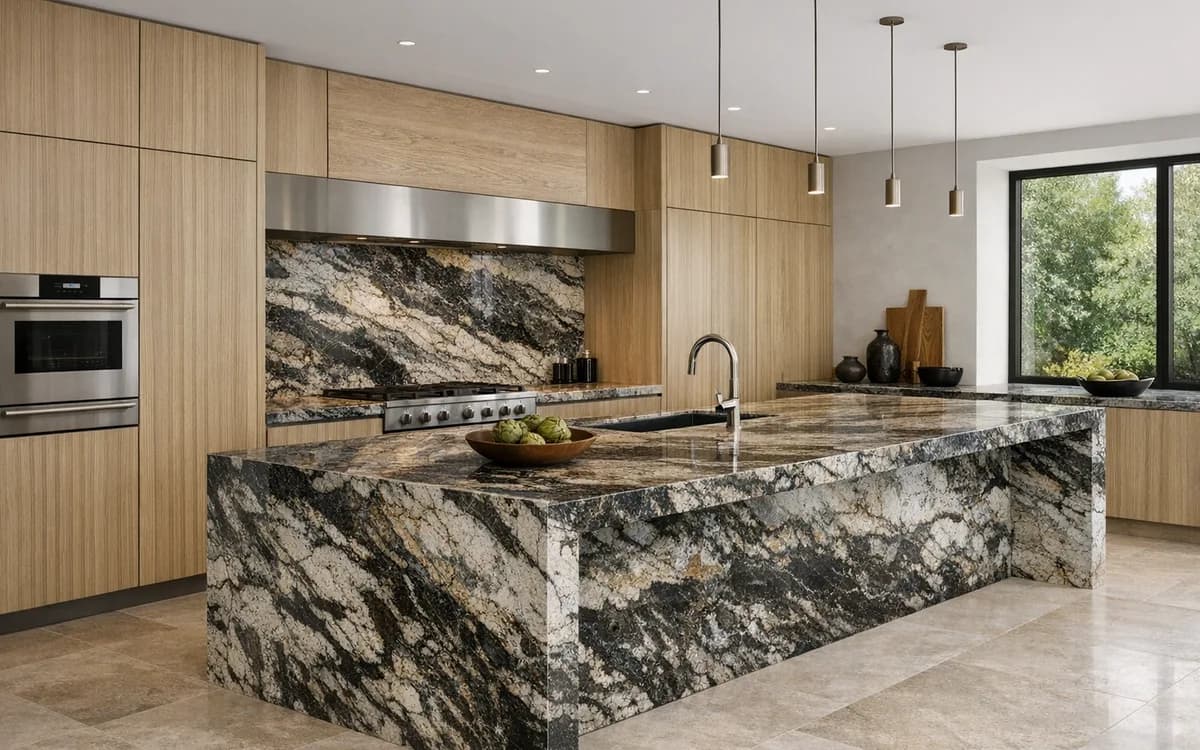
Granite is an igneous rock formed from cooled magma, prized for its hardness and resistance to scratching. It is a practical choice for kitchen countertops where durability matters.
Character and behaviour
Granite has a coarse, speckled grain produced by visible crystals of quartz, feldspar, and mica. Colors range from pale grey and cream to deep black and burgundy, varying by quarry. The surface is hard and cool to the touch, and polished finishes reflect light clearly.

Best for
- Kitchen countertops
- Island worksurfaces
- High-traffic food prep areas
- Outdoor kitchen surfaces
Avoid for
- Spaces needing a uniform, consistent look
- Budgets sensitive to slab variation costs
Care and maintenance
Seal annually to resist staining, as granite is porous despite its hardness. Wipe spills promptly and avoid prolonged contact with acidic liquids, which can dull the finish over time.
Guides featuring Granite
- 7 minMarble vs quartz vs granite for countertops
Marble is natural calcite — beautiful and soft. Quartz is engineered resin and minerals. Granite is hard igneous stone. Here is an honest comparison before you commit.
- 7 minGranite vs quartzite countertops
Both are hard, natural, and heat-resistant — but they are geologically different, and "quartzite" is one of the most mislabeled stones sold at fabricator showrooms.
- 7 minEngineered quartz vs natural stone countertops
Engineered quartz never needs sealing and resists staining better than most natural stone — but it is not heat-proof, and it is not natural stone, whatever the showroom display implies.