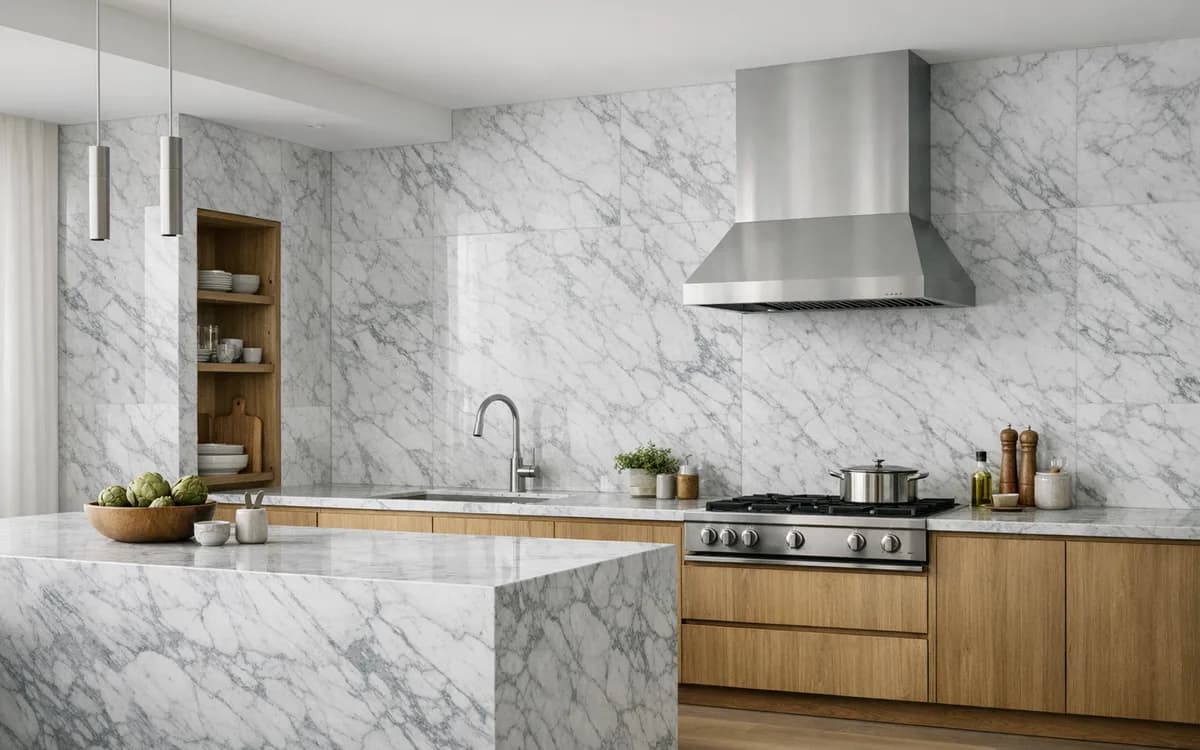
These three surfaces dominate kitchen countertop conversations — but they are not three versions of the same product. Marble is natural metamorphic stone, granite is natural igneous stone, and quartz surfacing is factory-made from crushed quartz bound with polymer resin.
Your choice should start with how you cook and clean, not with which Instagram kitchen looked best. Acid etching, heat tolerance, scratch resistance, and repair options all differ.
Marble
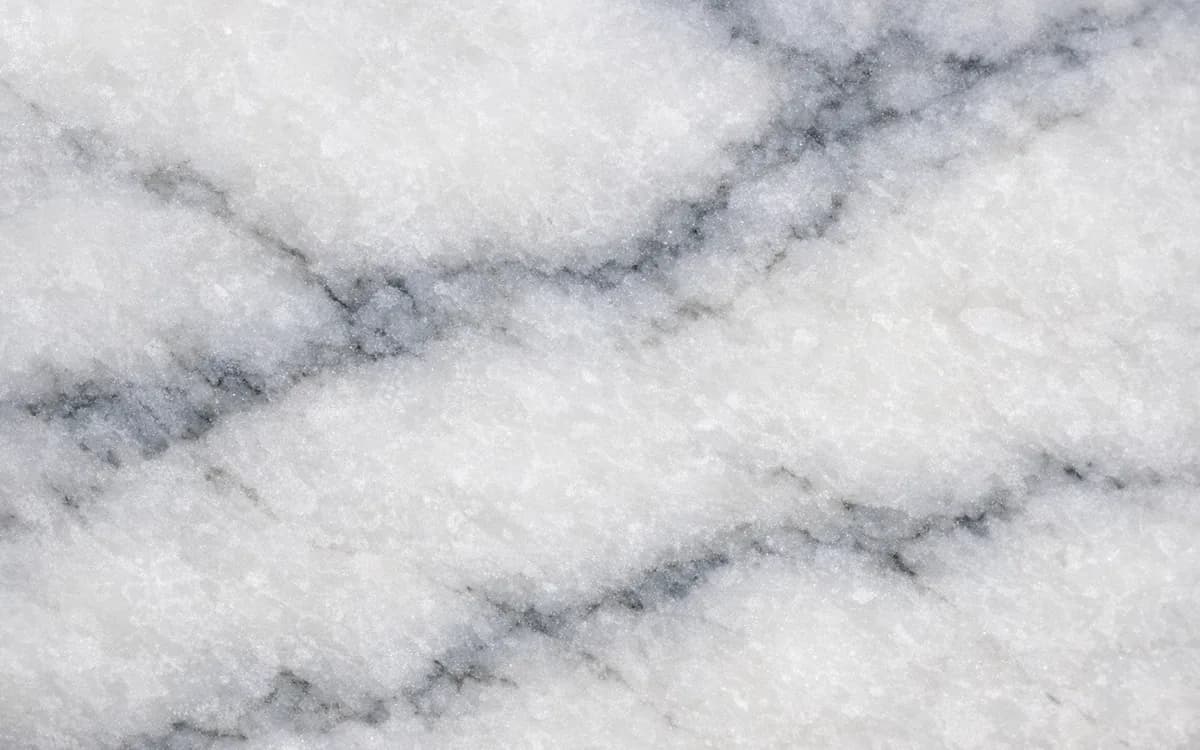
Marble (mostly calcite) scores about 3 on the Mohs hardness scale — softer than knife steel and softer than quartz or granite. Lemon, vinegar, and many household cleaners can etch the surface chemically, leaving dull marks even without a visible stain.
People choose marble for depth, translucency, and natural veining that engineered products imitate imperfectly. It suits homeowners who accept patina, use cutting boards consistently, and seal periodically.
Repair options exist: professional honing can refresh etched areas; small chips can sometimes be filled. Marble is not disposable after the first mark — but it is also not zero-maintenance.
Cool-to-the-touch feel and subtle light play at edges are reasons designers keep specifying it despite forum warnings.
Granite

Granite is harder — often around 6–7 Mohs depending on mineral content — and generally more resistant to scratching and acid etching than marble. It is still natural stone: porous to varying degrees, may need sealing, and can chip at edges if struck.
Granite suits busy kitchens where durability matters more than the soft glow of marble. Pattern and colour vary by quarry; select slabs individually rather than trusting a small sample alone.
Dark granites can show water spots; light granites can look busy with strong speckle. Leathered and honed granites are increasingly popular for softer appearance with retained hardness.
Radon discussions occasionally appear in granite debates; reputable geological and health agencies have published guidance that natural stone in homes is typically not a dominant radon source compared with soil gas — verify local advice if concerned.
Quartz (engineered)

Engineered quartz is non-porous in typical marketing terms and does not require sealing. It resists staining well and offers consistent colours and patterns. It is not immune to damage: hot pans can scorch or discolour resin binders, and UV exposure can affect some colours over time outdoors.
Quartz suits low-maintenance priorities and modern uniform aesthetics. It cannot be repolished like natural stone in the same way if resin burns or deep damage occurs — follow manufacturer heat and cleaner guidelines.
Brands differ in resin content, recycled material, and warranty terms. “Quartz countertop” is a category, not one identical product.
Outdoor kitchens and full-sun windowsills are common misapplications — UV and heat stress resin binders. Keep quartz in interior conditioned spaces unless the manufacturer explicitly approves exterior use.
Cost, fabrication, and resale
Material cost is often less than half the installed price. Edge detail, sink cut-outs, waterfall mitres, and long-distance delivery move quotes more than choosing between mid-tier granite and Carrara-type marble.
Resale value is subjective: in some markets marble still signals luxury; in others buyers fear maintenance. Choose for how you live, not only for the next owner.
Quick decision guide
Choose marble if you value natural stone character and accept etching and sealing. Choose granite if you want natural stone with harder daily performance. Choose quartz if you prioritise low porosity and consistent appearance over geological uniqueness.
Visit a stone yard with your cabinet door and flooring samples. Compare honed vs polished finishes under your own lighting — finish changes maintenance appearance more than many buyers expect.
Hybrid kitchens — marble island, quartz perimeter — are professionally common. They let you photograph marble where it shows and prep on a harder surface where acidity and knives concentrate.