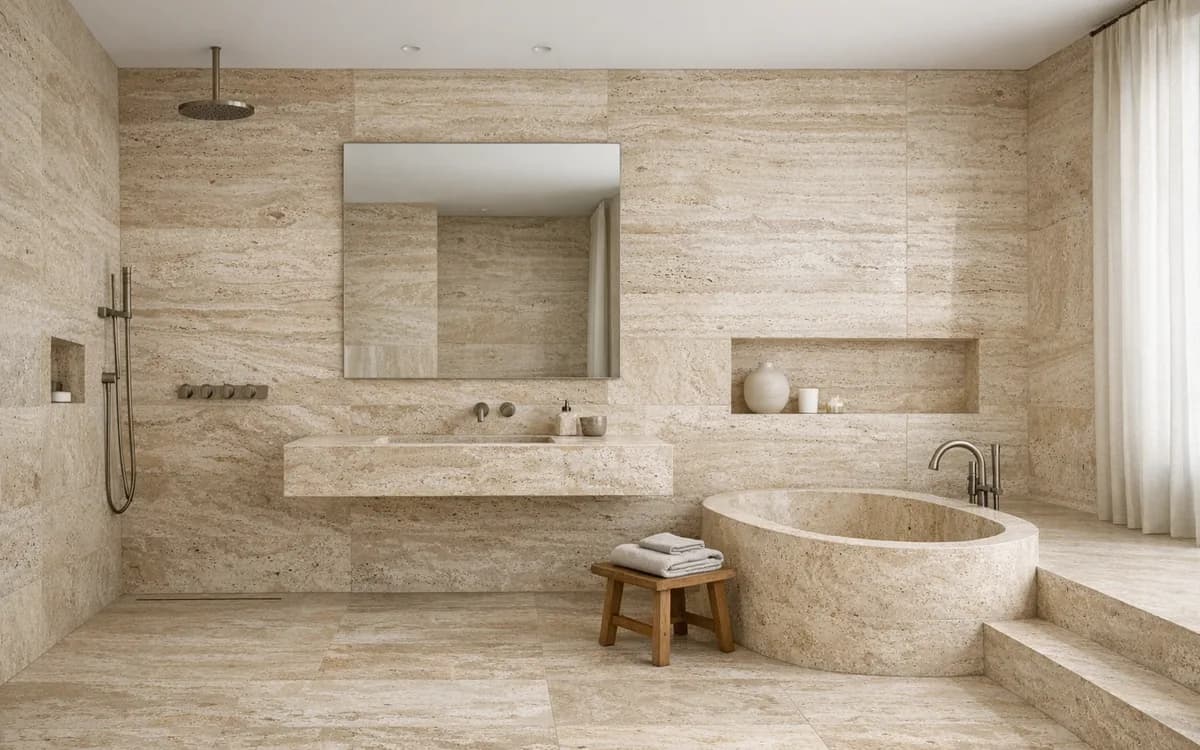
Travertine and limestone are calcareous — they etch from acids exactly like marble does, and both are typically more porous, so they absorb liquids faster if unsealed. Slate is metamorphic and generally harder and less porous, but its natural cleft surface can still trap grit that scratches the finish over time.
Treat any of these as "needs sealing and pH-neutral cleaner" by default, then confirm the specific finish (honed, polished, tumbled, or natural cleft) with your supplier, since finish affects absorption rate more than the base stone name alone.
Daily and weekly habits
Dust mop or vacuum (with a hard-floor setting, not a beater bar) before wet mopping — grit ground underfoot is the leading cause of dulling on honed stone floors. Use a stone-safe, pH-neutral cleaner and a damp (not soaked) mop, then dry the surface rather than air-drying, which leaves mineral spotting.
Entrance mats reduce the amount of grit tracked onto the floor more effectively than any cleaning product — this single habit does more for a stone floor's long-term appearance than premium sealers alone.
Sealing schedule
Reseal travertine and limestone roughly every one to two years in normal residential traffic, more often in wet or high-traffic zones — the water-drop test (does water bead or absorb within a few minutes) is a reliable way to check whether it is due. Slate generally needs sealing less frequently, but confirm with your supplier since finish and quarry source vary.