Stone
Travertine
Travertine is a sedimentary limestone formed by mineral springs, recognised by its natural voids and warm, banded surface. People choose it for its earthy texture and softer appearance compared to polished marble.
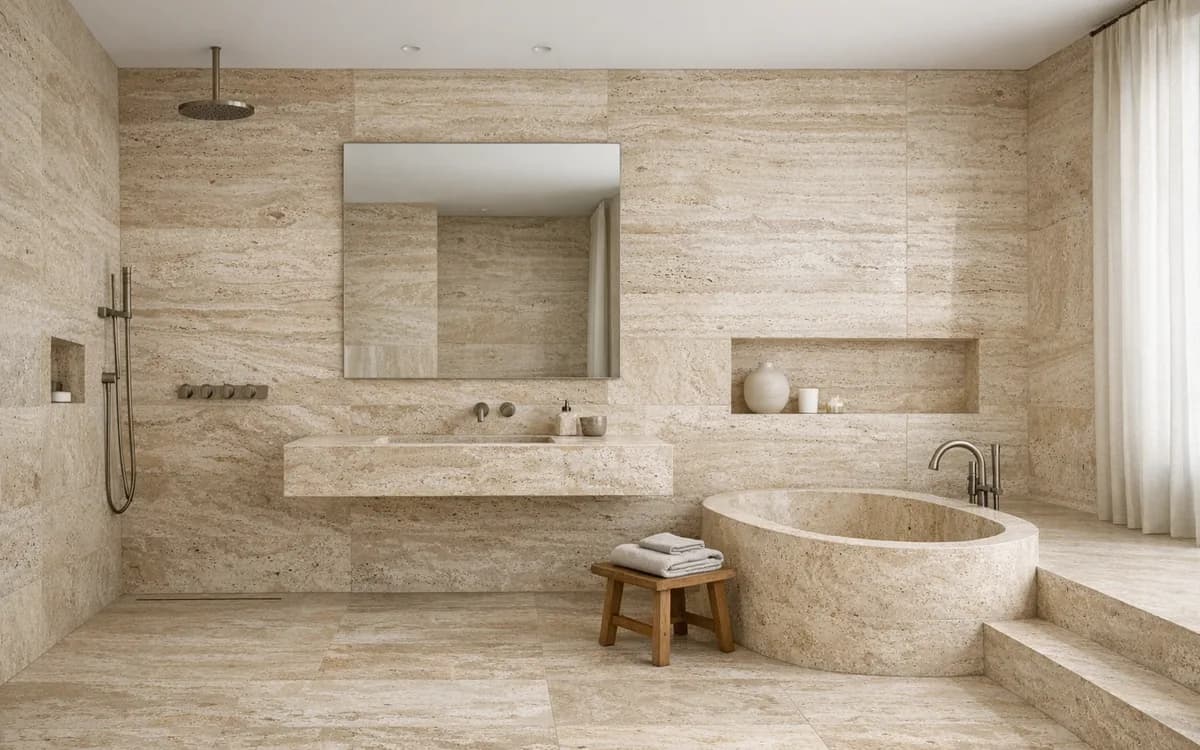
Character and behaviour
Its surface ranges from filled-and-honed to open-pore unfilled, giving it a tactile, matte quality. Colour runs from ivory and walnut to russet and silver. Being calcite-based, it reacts to acids and scratches more readily than granite or quartzite.
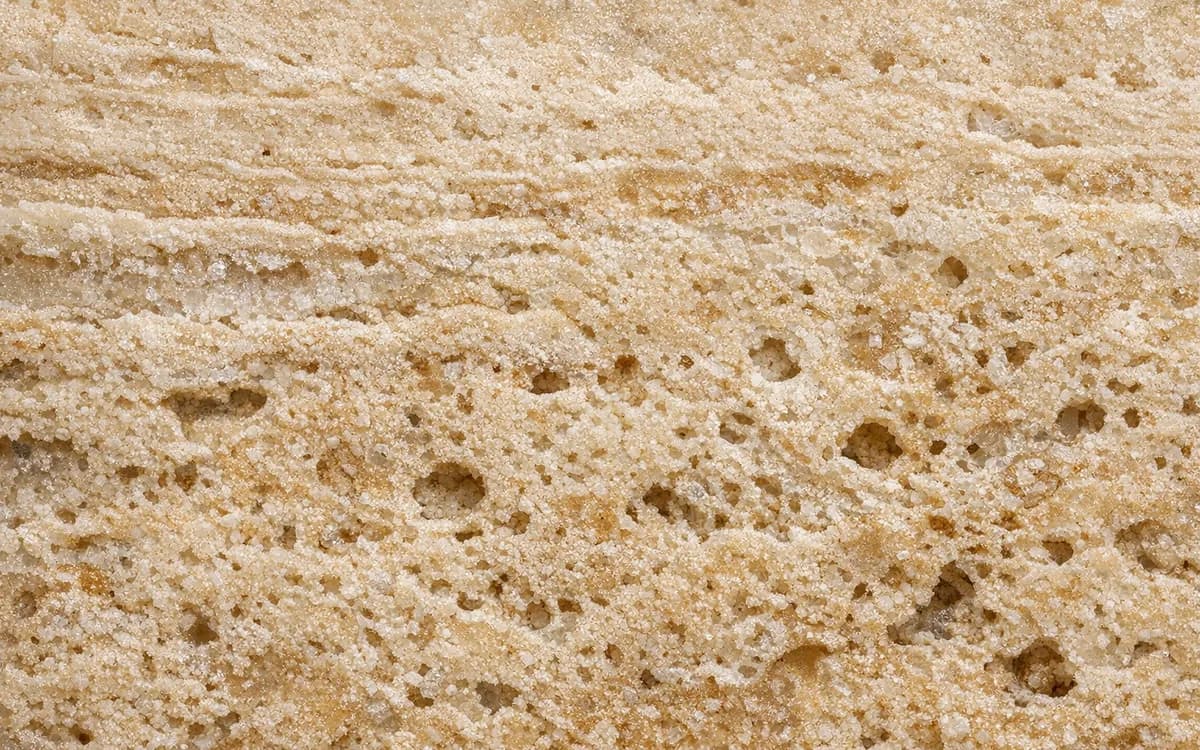
Best for
- Bathroom floors and walls
- Wet-room feature walls
- Low-traffic shower surrounds
- Earthy, textural interior schemes
Avoid for
- Kitchen countertops near acidic foods
- High-traffic unfilled-finish floors
- Outdoor freeze-thaw climates
Care and maintenance
Seal on installation and reseal every one to two years. Wipe spills promptly; avoid acidic cleaners, which etch the calcite surface. Unfilled finishes trap dirt and need more frequent attention.
Guides featuring Travertine
- 6 minFrom geology to stone tile
Limestone, slate, and travertine start in geology — not in a showroom. Here is how rock types differ before you buy.
- 7 minHow to care for natural stone floors day to day
Travertine, limestone, and slate each fail in different ways when cared for like a ceramic tile floor. Here is what actually protects them long term.
- 8 minPorcelain tile vs natural stone
Porcelain is factory-made, low-porosity, and consistent. Natural stone is geological — unique, porous to varying degrees, and often more expensive to install. Which fits your room?