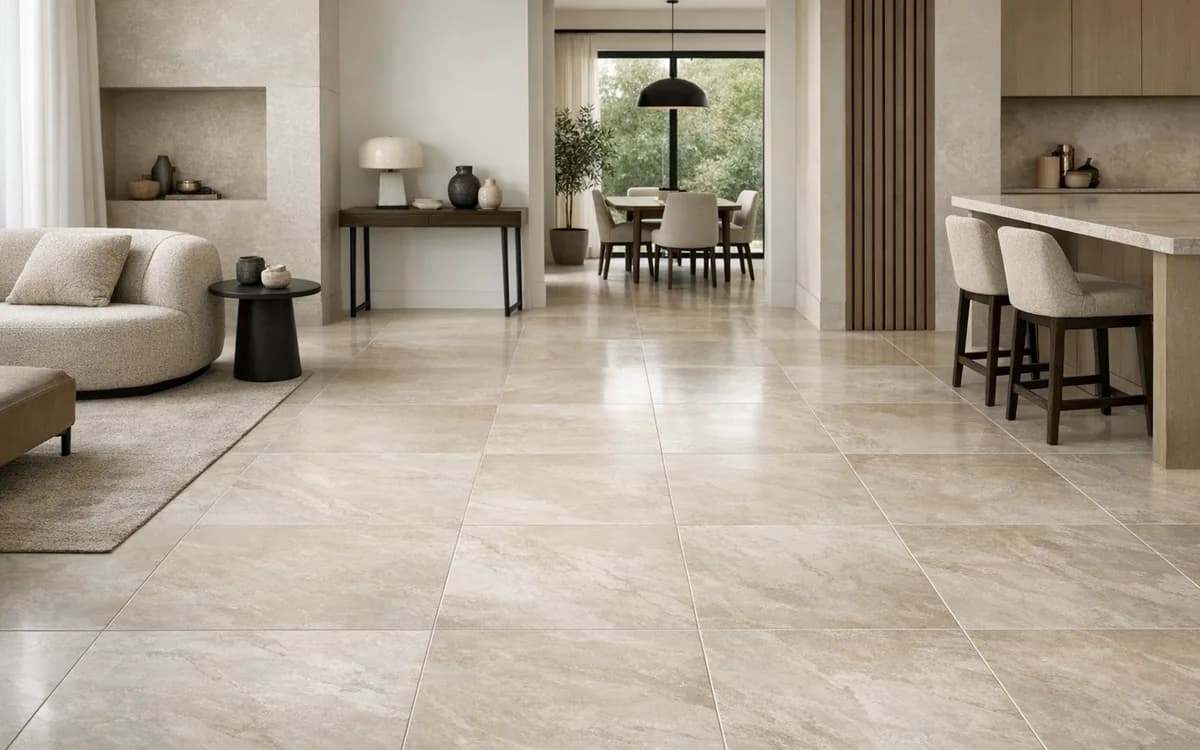
Porcelain tile and natural stone compete in bathrooms, kitchens, and entry floors — but they are different categories. Porcelain is a manufactured ceramic fired at high temperature. Natural stone is cut from quarries and retains geological variation.
Neither is automatically “better.” Porcelain wins on predictable maintenance in wet zones; stone wins on authenticity and depth when you accept sealing and variation.
Porcelain tile
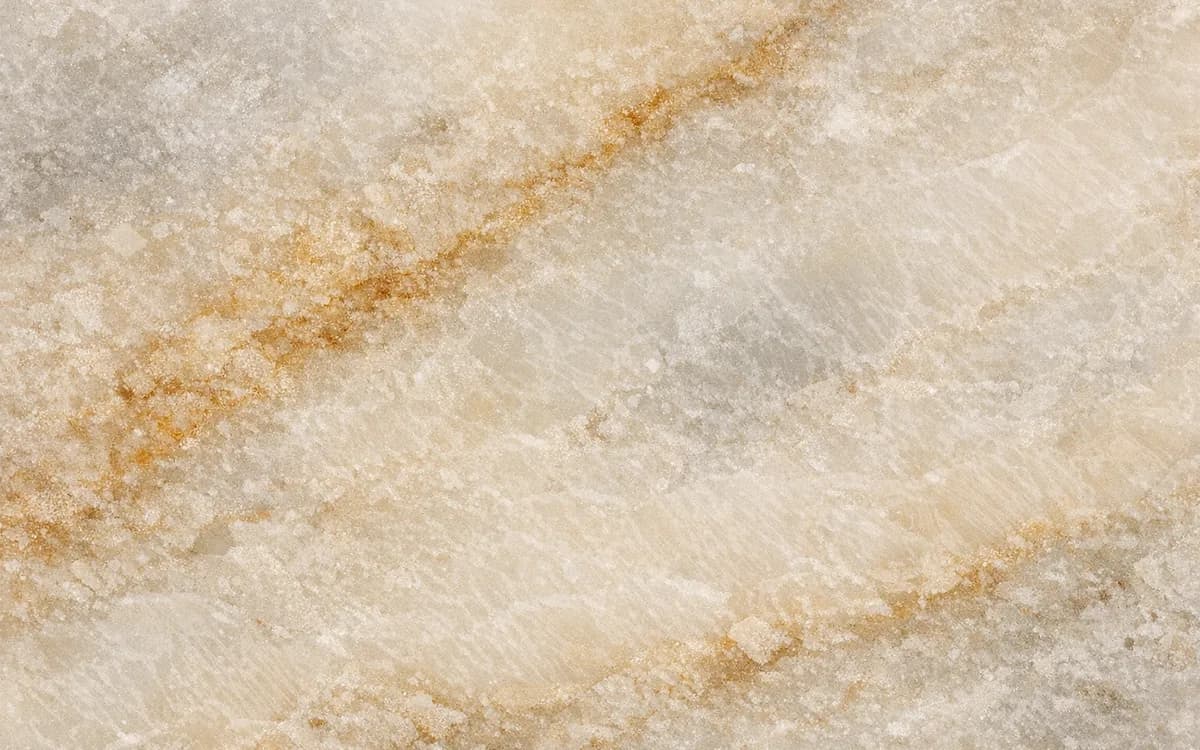
Modern porcelain can mimic marble veining convincingly at lower maintenance cost. Low water absorption rates suit showers and busy family bathrooms. Large-format panels reduce grout lines — important for minimal modern layouts.
Downside: repeats in printed patterns may become visible across large floors. Chips at edges can be harder to blend than with uniform colour bodies.
Limestone and travertine
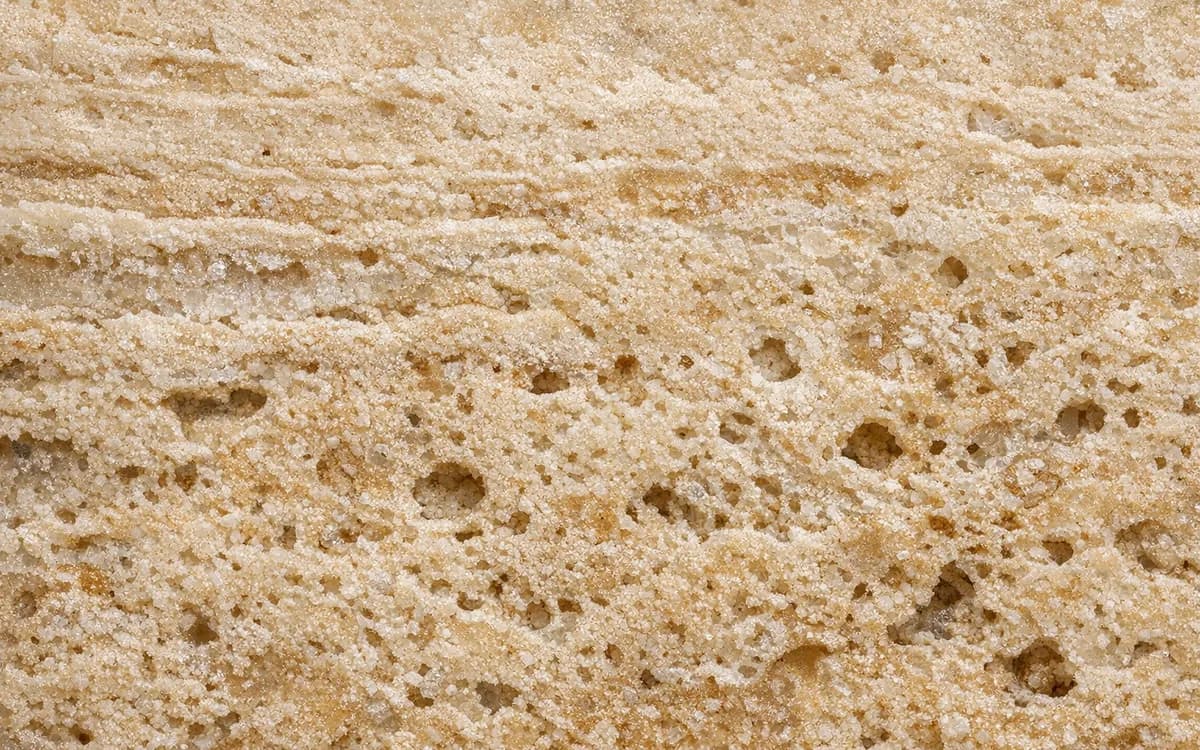
Limestone and travertine are sedimentary stones with warmer, tactile surfaces. Travertine’s natural pits can be filled or left open for character. Both may need sealing in wet areas and react to acidic cleaners.
They suit Mediterranean, rustic, and spa-like bathrooms where variation reads as feature, not defect.
Installation and lifecycle
Both need qualified tile setters, flat substrates, and movement joints. Stone often costs more in material and fabrication; porcelain can reduce sealing labour over time.
For heated floors, confirm compatibility with your system and adhesive. For outdoor use, verify slip rating and frost resistance — not all porcelain or stone qualifies.