Marble
Calacatta marble
A white calcite marble quarried in the Apuan Alps, known for its bright white ground and bold, widely spaced veining. Chosen for its strong visual contrast and natural variation.
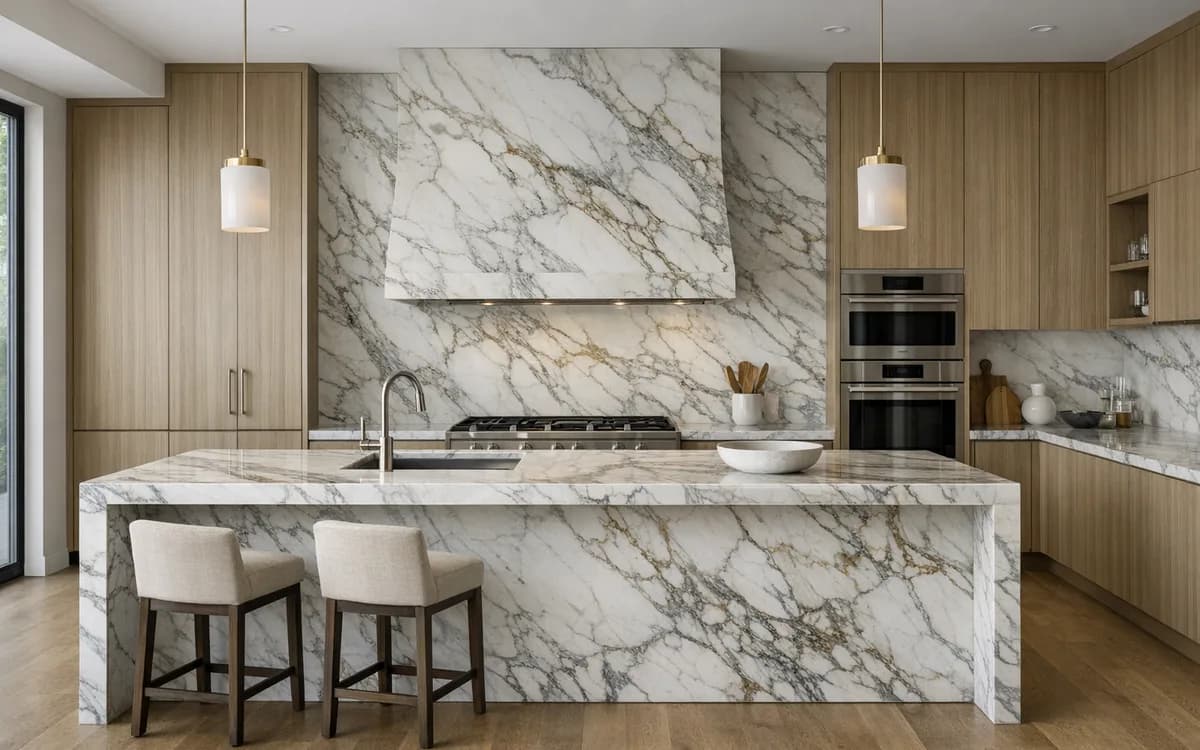
Character and behaviour
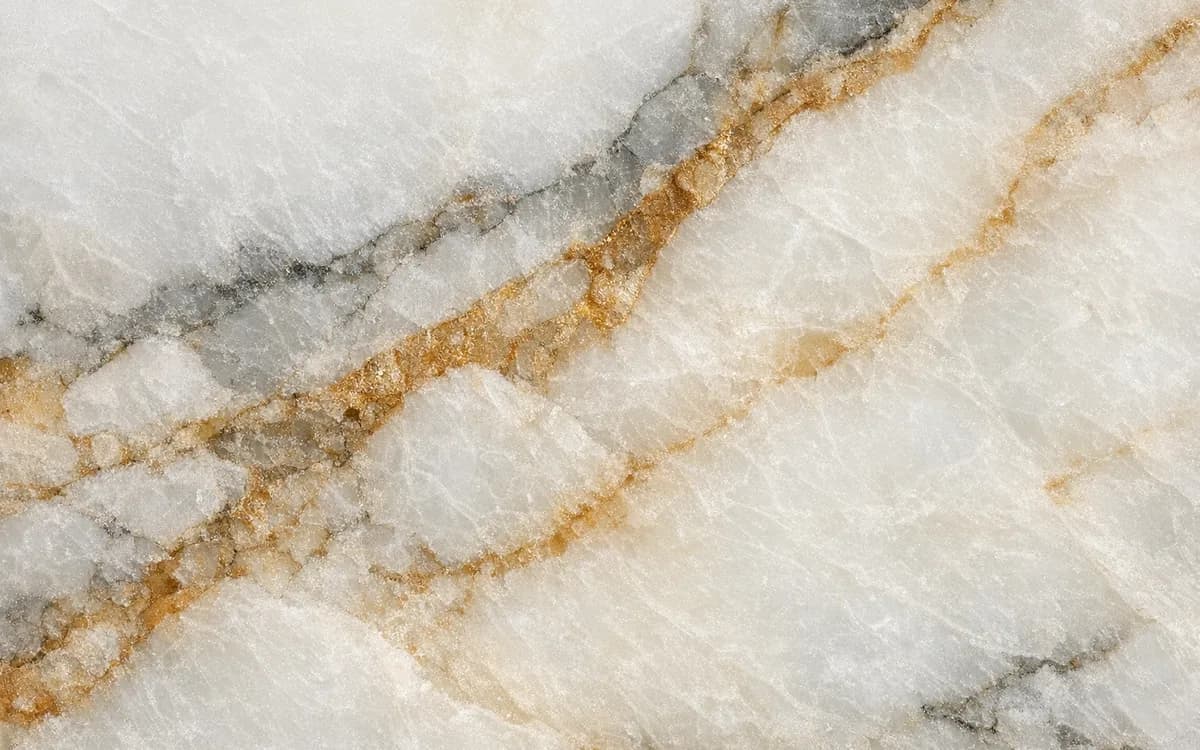
The background is a clean, cool white with veins ranging from grey to gold-tinged, often running in broad sweeping patterns. Each slab is unique. The polished surface feels smooth and cool to the touch but is calcite-based, meaning it reacts to acids and scratches more readily than harder stones.
Best for
- Kitchen island statement surfaces
- Bathroom vanity tops
- Feature wall cladding
- Fireplace surrounds
Avoid for
- High-traffic unsealed floor areas
- Worktops near frequent acid use
- Outdoor applications
Care and maintenance
Seal on installation and reseal annually. Wipe acid spills immediately as lemon juice, vinegar, and wine etch the surface. Use pH-neutral cleaners only.
Guides featuring Calacatta marble
- 7 minMarble in kitchens — an honest guide
Marble is beautiful and geologically soft. Acid etches it, oil can stain it, and patina appears — here is when that trade-off still makes sense.
- 5 minCarrara vs Calacatta marble
Both are Italian white marbles with similar care needs — but Carrara is usually greyer and quieter, while Calacatta is marketed as whiter with bolder veins and a higher price tag.
- 6 minTypes of marble explained
Carrara, Calacatta, Statuario, Nero Marquina — marble names usually describe origin and appearance, not a single global standard. How to read them before you buy.
- 6 minBest marble for kitchen countertops
No marble is maintenance-free in a working kitchen — but some choices etch more quietly, hide patina better, and cost less. What to pick if you still want marble.