Marble is metamorphic rock dominated by calcite or dolomite. In showrooms, names usually tell you where a stone comes from and what it looks like — not its exact hardness, porosity, or price.
Two slabs with similar names can perform differently depending on quarry, cut, resin treatment, and finish. Treat names as a starting point, then verify with the actual material in front of you.
Dolomitic marbles contain more magnesium and can behave slightly differently from pure calcite marbles in acid exposure — both remain natural stones that need informed care, not generic “wipe with anything” treatment.
Imported names sometimes describe colour (“Arabescato,” “Bianco”) rather than a single quarry. That is normal; it is also why slab inspection beats label memorisation.
Italian whites: Carrara, Calacatta, Statuario
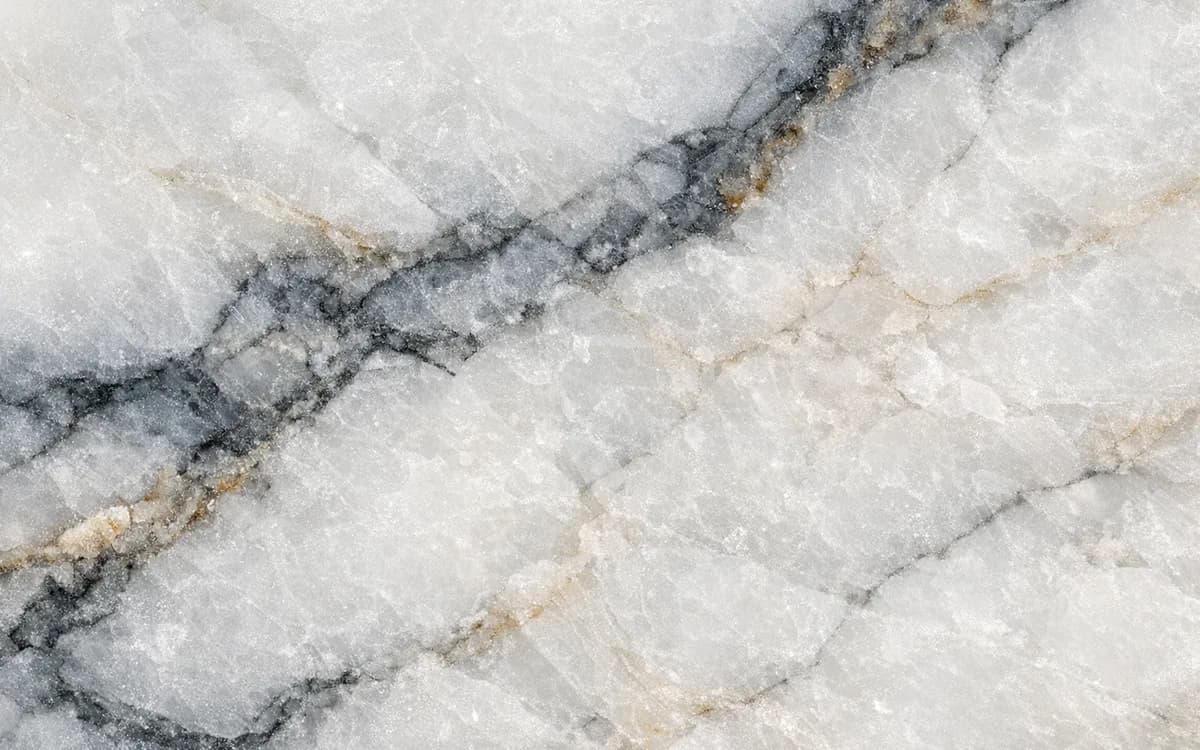
Carrara is the broad category from the Carrara region — often white-grey with soft veining. Calacatta is marketed as whiter with bolder veins. Statuario sits in premium white marble marketing with strong contrast and limited availability.
All three require similar care: seal against staining, expect acid etching, avoid treating any of them as scratch-proof worktops.
Statuario and top Calacatta lots command high prices for large continuous veins suitable for book-matched feature walls. Carrara often anchors whole kitchens at lower material cost with quieter pattern.
See our library entries for Carrara, Calacatta, and Statuario for origin detail and room-by-room suggestions.
Dark and warm marbles
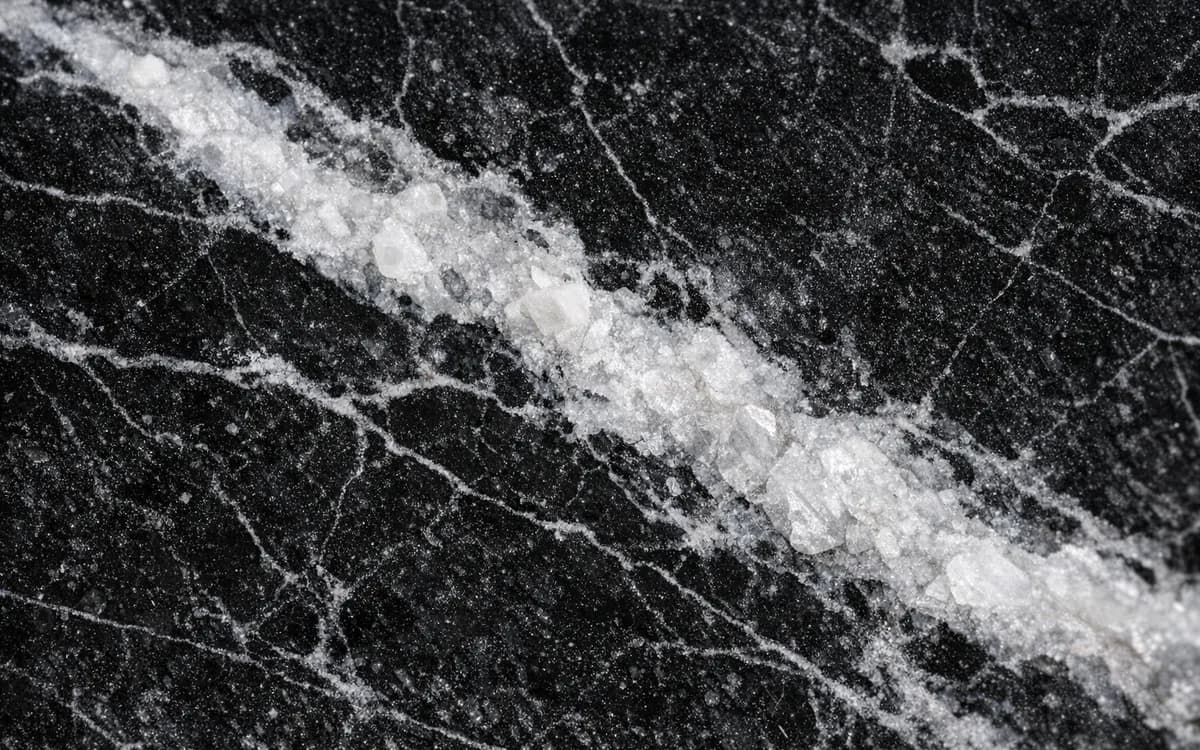
Nero Marquina from Spain is a well-known black marble with white veining — striking in bathrooms and feature walls. Emperador marbles from Spain show brown tones; Crema Marfil is a beige-cream Spanish classic for floors and warm interiors.
Dark marbles show etching and dust differently from white marbles. Honed finishes often hide fine scratches better than high polish in high-traffic floors.
Verde Alpi and other coloured marbles act as accent stones — dramatic on islands or fireplace surrounds, less common as full kitchen fields because strong colour competes with cabinetry and dating risk rises.
Thassos from Greece offers near-white minimal veining for bright bathrooms; it still etches like other calcite marbles despite its clean appearance.
Finish changes the story
Polished marble reflects light and shows etching clearly. Honed marble is matte and often more forgiving in kitchens. Leathered textures add tactile grain that can hide fine use marks.
The same slab name in different finishes can feel like different materials in daily life — always compare finish samples, not only colour chips.
What to ask your supplier
Ask for quarry or bundle name, thickness, finish, resin reinforcement, and absorption test data if available. Request photos of the full slab, not only a corner sample.
Compare installed cost: material is often less than half the total for fabrication, templating, edges, cut-outs, and installation.
Confirm whether your slab is first quality or commercial grade — small pits and fill are normal in some grades and unacceptable in others depending on your design tolerance.