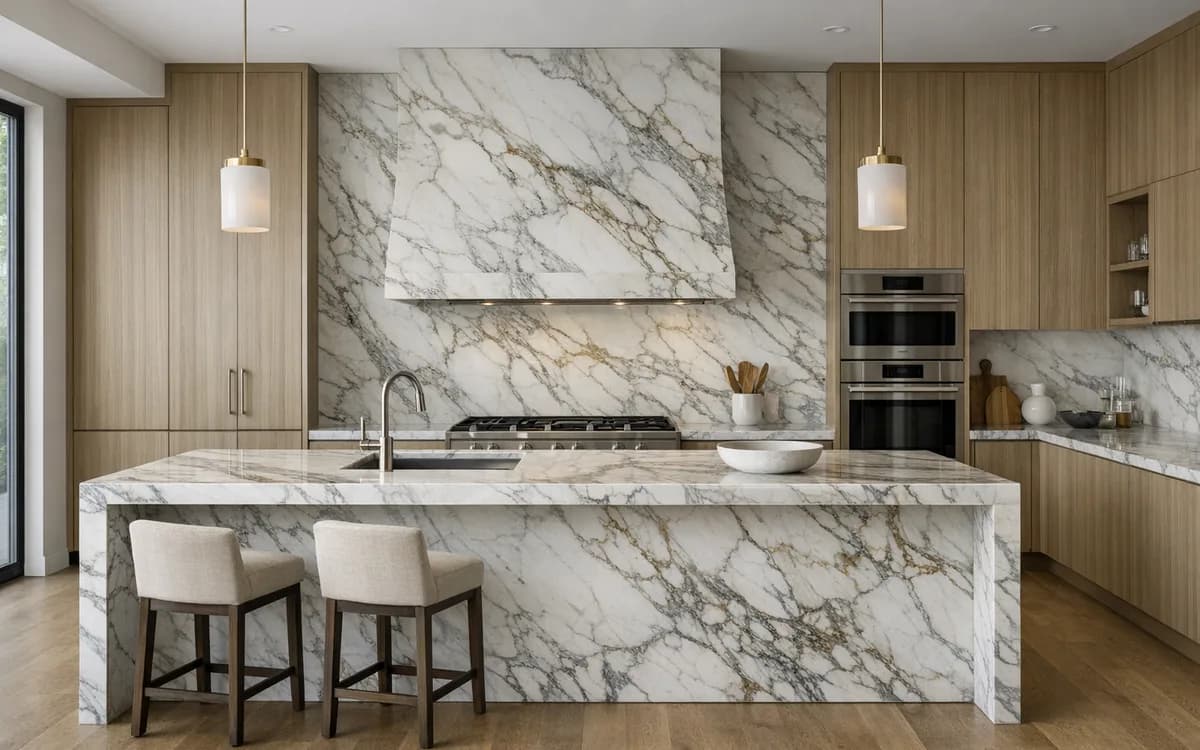
Search traffic asks for the “best” marble countertop as if one slab wins on durability. Geologically, most kitchen marbles are calcite-dominated and acid-sensitive. The best marble is the one whose look you love and whose patina you will accept.
That said, some choices are more forgiving in real kitchens: honed finishes, greyer Carrara-type tones, and layouts that keep high-risk zones on separate surfaces.
Ranking marbles by “durability” inside the marble category is subtle — hardness does not vary enough to make one marble immune while another fails. Lifestyle and finish matter more than whether the slab is called Carrara or Calacatta.
The better question is: which marble’s appearance at year three — with honest use — still makes you happy?
Carrara-type whites
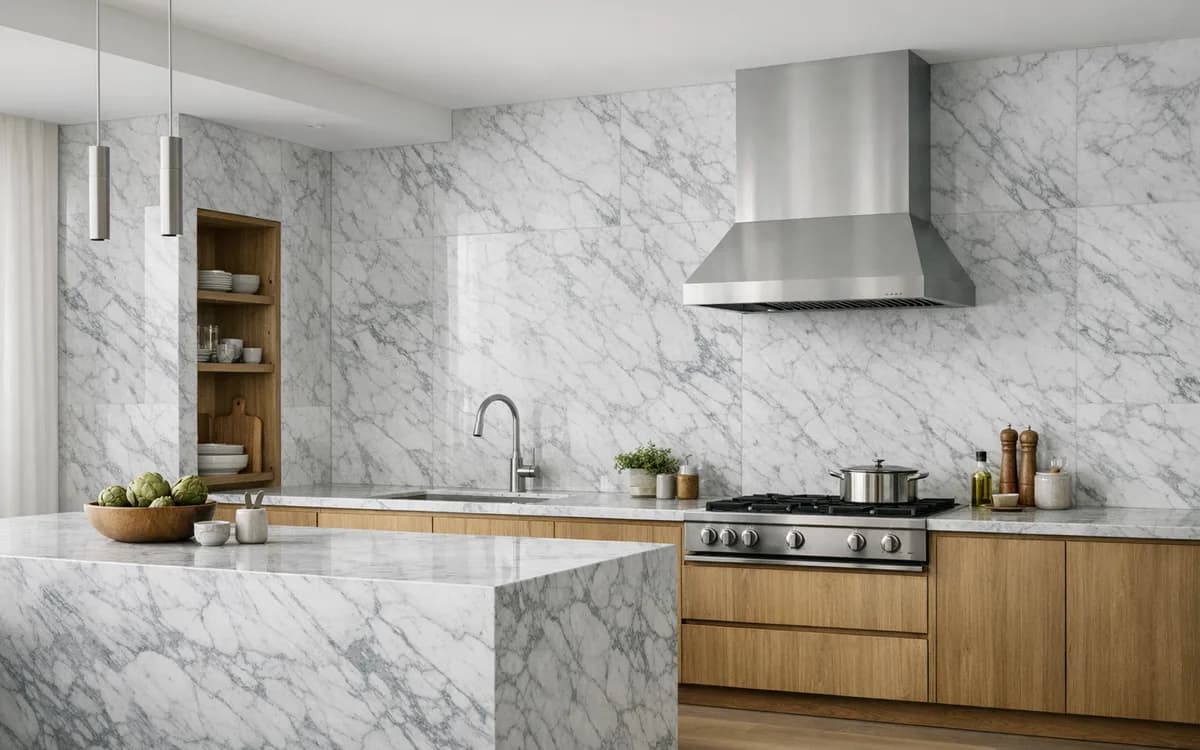
Carrara and similar white-grey marbles are widely available and often less expensive than dramatic Calacatta-type slabs. Fine grey veining can soften the appearance of etch marks compared with large polished white fields.
Strong choice if you want Italian marble character without the top-tier slab premium — after inspecting your specific bundle.
Arabescato and other grey-veined Italian whites sit visually between quiet Carrara and bold Calacatta — worth comparing if you want movement without extreme contrast.
For families, honed Carrara on an island with quartz on the sink run is a proven compromise: marble where you see it, harder stone where you scrub pots.
Calacatta and Statuario
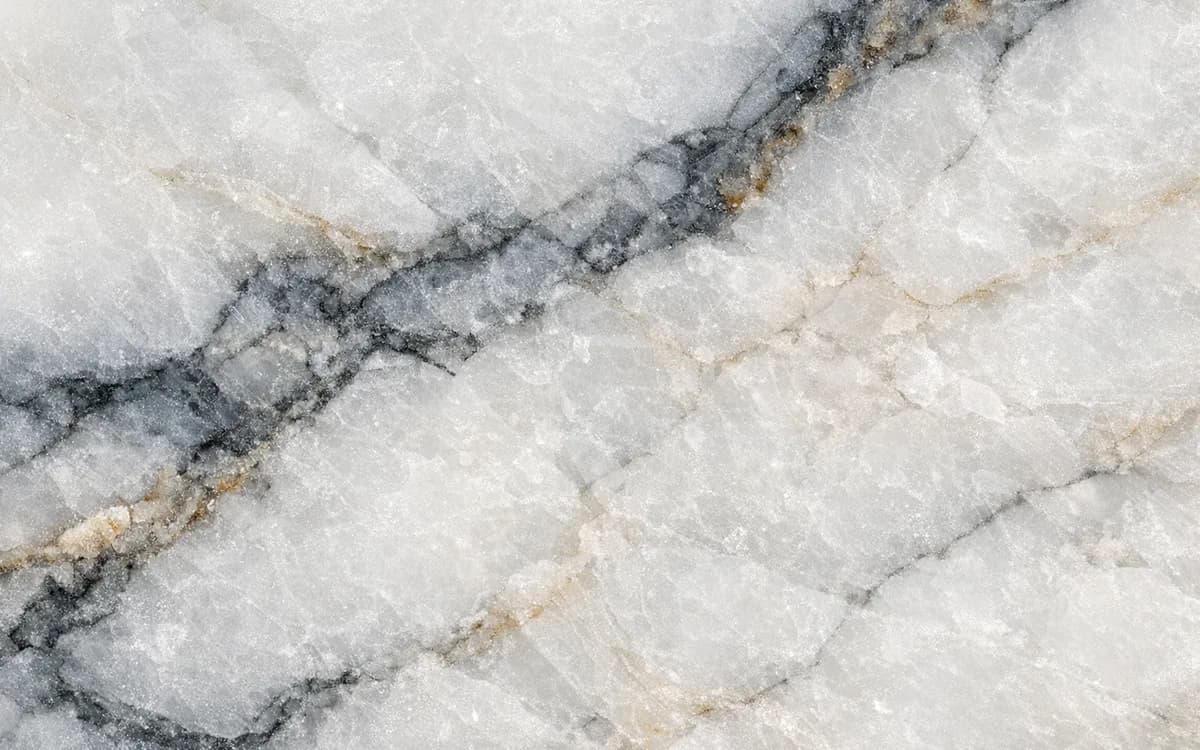
High-contrast white marbles photograph beautifully and cost more. They show etching and dull spots more visibly on polished surfaces because the contrast against a bright field is higher.
If you choose them for a kitchen, honed or leathered finishes and disciplined use of cutting boards and trivets matter more, not less.
Book-matched waterfall islands in Statuario are showroom centrepieces — plan budget for waste, skilled fabrication, and long lead times.
If you are choosing Calacatta primarily for status, visit yards with an open mind: a beautiful Carrara bundle may satisfy the room at lower cost.
Dark and accent marbles in kitchens
Nero Marquina and Emperador Dark appear on islands and bar tops for drama. They still etch and need sealing. Fingerprints and dust show differently on dark fields — daily wiping habits matter.
Using dark marble on a small island with light perimeter counters can deliver impact with less total maintenance area than a full dark kitchen.
Finishes and layout tricks
Honed and leathered finishes often look more natural as the surface ages than mirror polish. Some designers put marble on islands for appearance and use quartz or granite on perimeter prep zones.
Waterfall edges and full-height splashbacks increase visible surface area — beautiful, but more area to maintain. Plan sealing and daily wipe habits before you scale up the design.
Thickness matters: 3 cm slabs feel more substantial and can span larger unsupported spans depending on cabinet layout — discuss structure with your installer.
When to reconsider marble
If you expect zero etching from lemon, wine, and tomato sauce without maintenance, marble will disappoint. If you want natural stone but need harder performance, compare granite or quartzite before defaulting to marble because of photos alone.
Marble remains a legitimate kitchen material — millions of European kitchens prove it — when expectations and habits align with the geology.
If you are unsure, live with a large offcut or remnant board in your kitchen for a month — cook normally and see how you feel about marks before committing to a full slab.