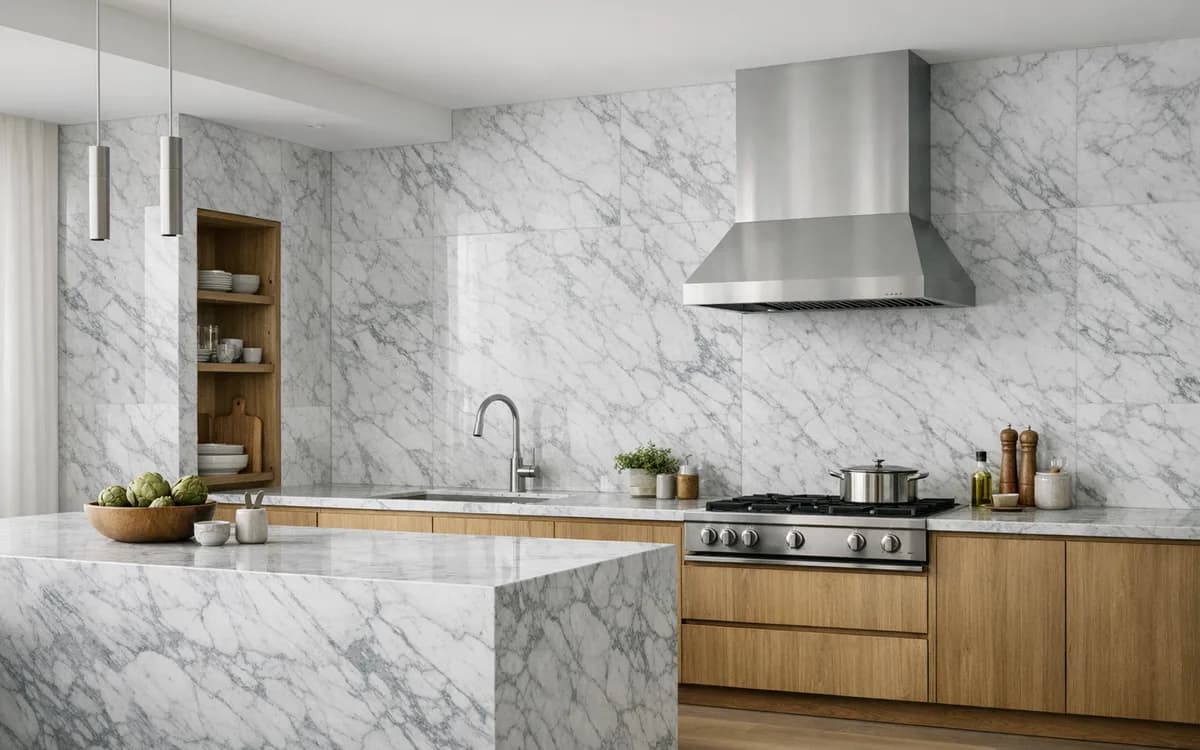
Marble countertops look exceptional in photography — and controversial in renovation forums. Both reactions are valid because the material is calcite-based (Mohs hardness about 3), meaning it is softer than quartz, granite, and knife steel.
Acidic foods and cleaners react with calcite and leave dull etch marks. This is chemistry, not poor installation. Oil and pigment can stain porous areas if left too long, even on sealed surfaces.
Etching and staining are different problems. A red wine stain is pigment in open pores; an etch from lemon juice is a chemical dulling of the surface itself. Sealers help with the first; they do almost nothing for the second. Many frustrated owners blame “bad sealer” when the real issue is acid on an unprotected work zone.
European kitchens have used marble for generations — often honed, often with visible use — while North American buyers sometimes expect showroom polish to survive unchanged. Neither culture is wrong, but the expectation gap drives most disappointment online.
When marble still makes sense
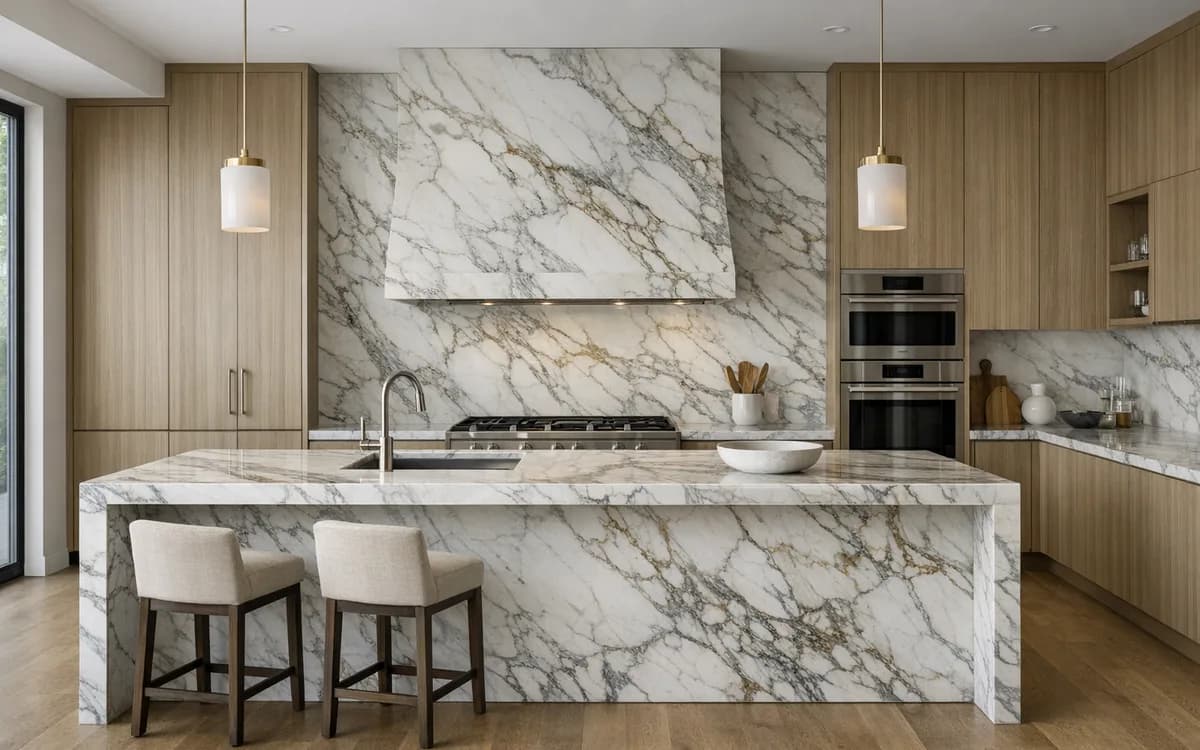
Marble suits homeowners who cook with cutting boards, wipe spills quickly, and like honed patina. Baking zones, low-traffic islands, and homes where the kitchen is partly display, partly workspace are realistic fits.
It is a weaker fit for households that expect mirror polish to survive years of direct cutting, lemon juice, and strong spray cleaners without any visible change.
Pastry chefs and serious bakers often prefer marble because it stays cool and offers a smooth rolling surface. A marble inset or dedicated baking zone can deliver that benefit without wrapping the entire kitchen in a high-maintenance finish.
If your kitchen is open to the living area and the island is a visual centrepiece, marble’s depth and natural variation can justify the care in ways a uniform quartz field cannot. The decision is partly practical, partly emotional.
Heat, sealing, and cleaners
Marble tolerates normal hot cookware better than rapid thermal shock — trivets remain good practice. Penetrating sealers slow staining but do not make marble acid-proof.
Use pH-neutral cleaners approved for natural stone. Re-seal when water absorption increases — test with a few drops of water on honed areas and see how fast they darken.
Avoid vinegar, bleach, bathroom limescale sprays, and generic “kitchen degreasers” unless the label explicitly approves marble. Many household favourites are acidic or alkaline enough to damage calcite within seconds.
Wine, coffee, turmeric, and oily dressings are the usual staining suspects. Blot — do not wipe aggressively — and clean with stone-safe product once the spill is lifted. A good habit beats a premium sealer.
Design choices that help
Honed and leathered finishes hide fine scratches better than high polish. Some designers limit marble to islands or baking areas and use harder materials on perimeter prep runs.
If you love the look but fear maintenance, compare marble-look porcelain or quartz on prep zones while keeping marble on a feature island — a common compromise in high-end builds.
Waterfall edges and full-height splashbacks multiply surface area and cost — beautiful, but more stone to maintain. A standard thickness splashback with painted or tiled zones above can reduce risk near the cooktop.
Undermount sinks show more of the stone interior; farmhouse sinks protect the front edge but create seam questions. Discuss seam placement and sink cut-out reinforcement with your fabricator before templates are final.
Talking to your fabricator and installer
Ask which sealer they recommend and whether they apply a factory pre-seal before installation. Confirm edge profile samples — ogee and bullnose edges chip more easily than simple eased edges in busy kitchens.
Inspect the slab before cutting. Mark zones you want for the island versus splashback so veining flows the direction you expect. Installation day is too late to discover a grey patch you dislike in the most visible metre of stone.