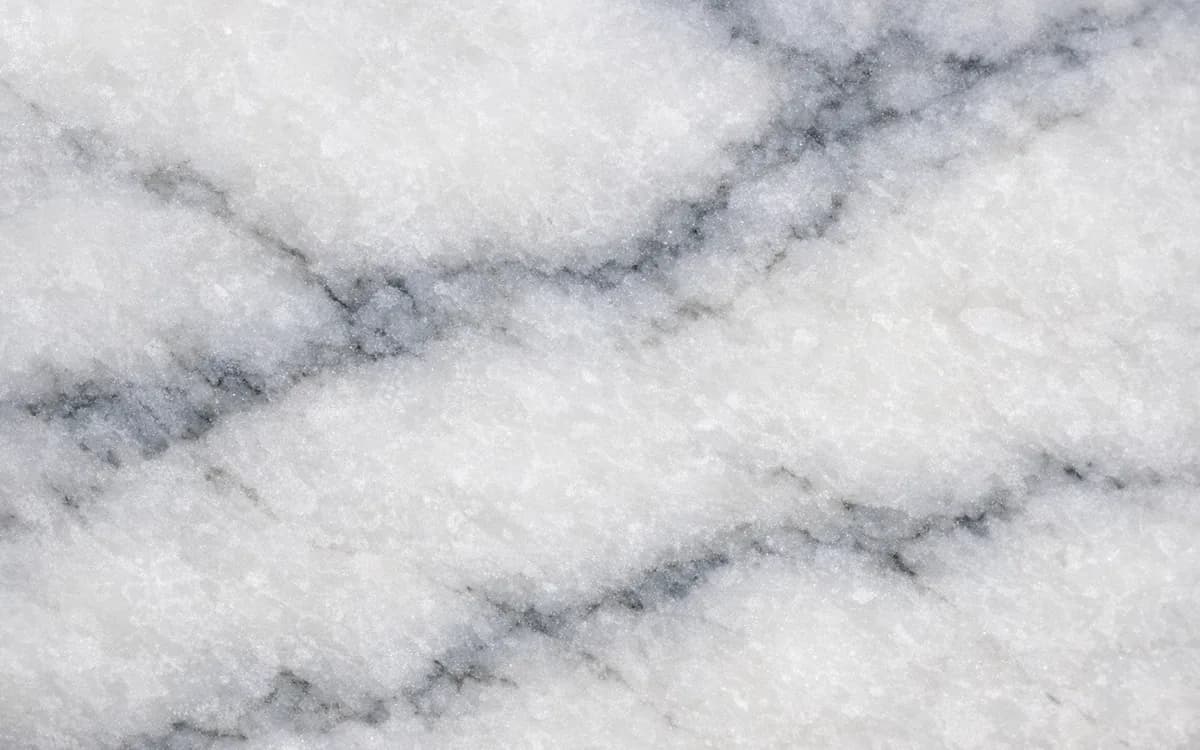
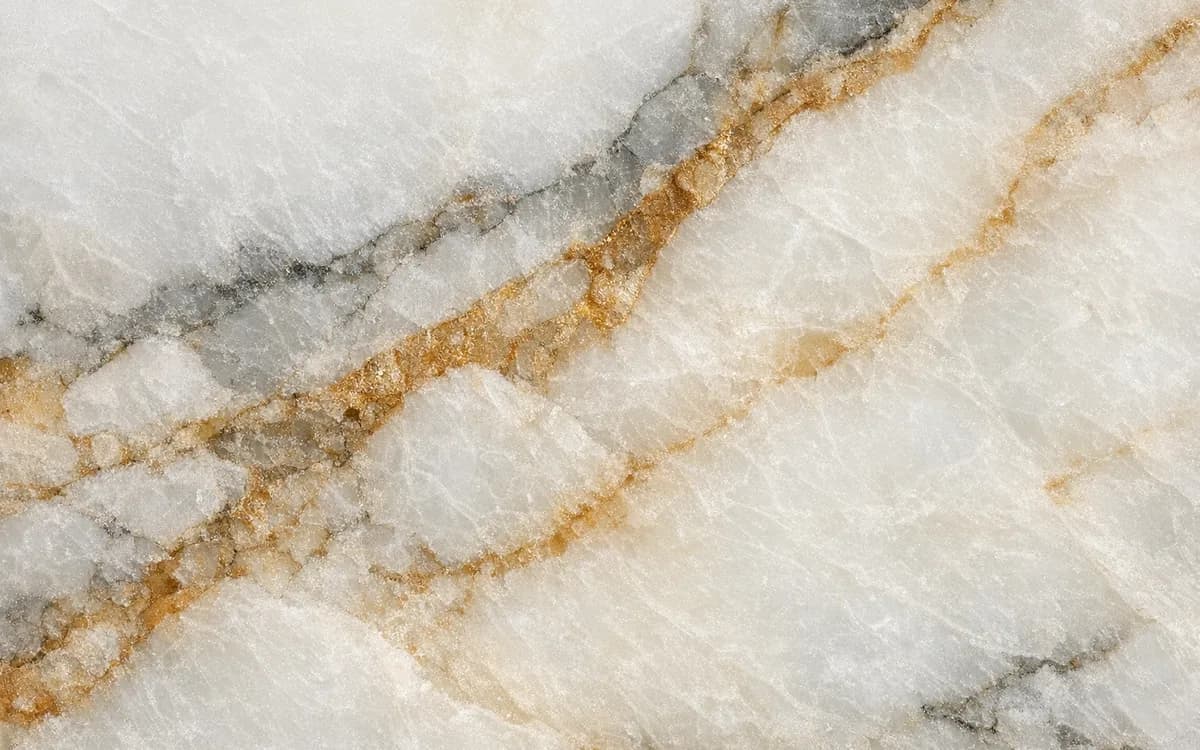
Carrara and Calacatta are both calcite marbles from Italy. They share the same practical reality at home: both etch from acid, both benefit from sealing, and neither behaves like a maintenance-free engineered surface.
The difference is mostly visual and commercial. Carrara — from the Carrara district in Tuscany — usually reads as white-grey with softer, feathery grey veins. Calacatta is presented in showrooms as a brighter white background with thicker, more dramatic veins, sometimes grey and sometimes warm gold.
Both names describe regional and aesthetic families, not single quarry products. Carrara Bianco C, Carrara Venato, and dozens of Calacatta sub-names (Calacatta Gold, Calacatta Borghini, etc.) add another layer of variation inside each category.
If a salesperson uses “Calacatta” as shorthand for “expensive white marble,” ask which quarry or bundle they mean. Documentation matters more than pronunciation.
How to compare slabs, not labels
Trade names are not tightly regulated worldwide. A sample chip labelled “Calacatta” may look closer to a quiet Carrara slab than to a high-contrast showroom hero image you saw online.
If matching veining across a kitchen island and splashback matters, choose from actual slabs or bundle photos from the same lot. Ask for origin documentation and inspect under the light conditions of your room — showroom spots hide subtle grey or yellow tones.
Bring cabinet samples, flooring planks, and paint chips to the stone yard. Carrara’s grey field can cool a warm white kitchen; Calacatta’s bright white can clash with cream cabinetry if you have not checked in person.
Photograph slabs with your phone in natural light and under the yard’s indoor lighting. Veins that disappear in one condition can dominate in another.
Price and availability
Calacatta-type slabs are generally priced higher because dramatic white fields with bold veining are rarer and heavily marketed for luxury projects. Carrara exports in larger volume and often delivers a calm Italian white look at a lower entry point.
Budget should include fabrication, edge profiles, cut-outs, and delivery — not only the square-metre slab rate. A well-chosen Carrara can look excellent in a full kitchen; a Calacatta name alone does not guarantee the slab you expect.
Waste factor rises with dramatic veining: fabricators may need to work around bold veins to align patterns on L-shaped tops. That labour shows up in the quote even when the slab square-metre price looks similar on paper.
Lead times differ by bundle. Popular Calacatta lots can sell before they reach your local yard; Carrara is often easier to source on shorter notice.
Care and performance — the same rules
Neither stone is harder than the other in a meaningful kitchen sense — both are calcite marbles. Acid etching, sealing, and cutting-board habits apply equally.
Where they differ in daily life is how marks look: grey-toned Carrara can hide fine etching better than a bright white Calacatta field with mirror polish. Honed finishes narrow that gap on both.
Which should you choose?
Choose Carrara when you want a softer, grey-toned white that forgives a lived-in patina and costs less. Choose Calacatta when you want high-contrast veining on a bright field and accept the premium — after verifying the actual slab.
For busy kitchens with heavy direct cutting and acidic cooking, consider whether marble at all fits your tolerance for etching. If yes, both stones need the same habits: cutting boards, quick wipe-ups, pH-neutral cleaners, and realistic expectations.
See our library pages for Carrara and Calacatta for origin, care, and related stones — then visit a yard with this comparison in mind rather than a fixed name on a mood board.