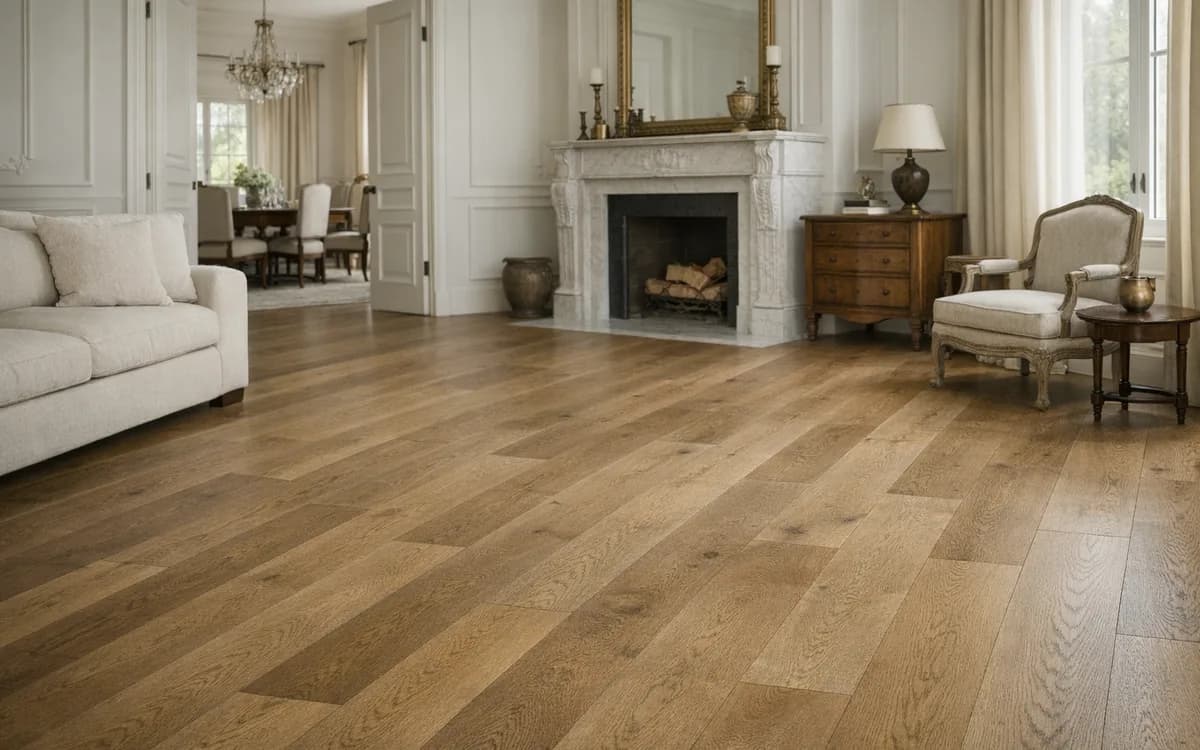
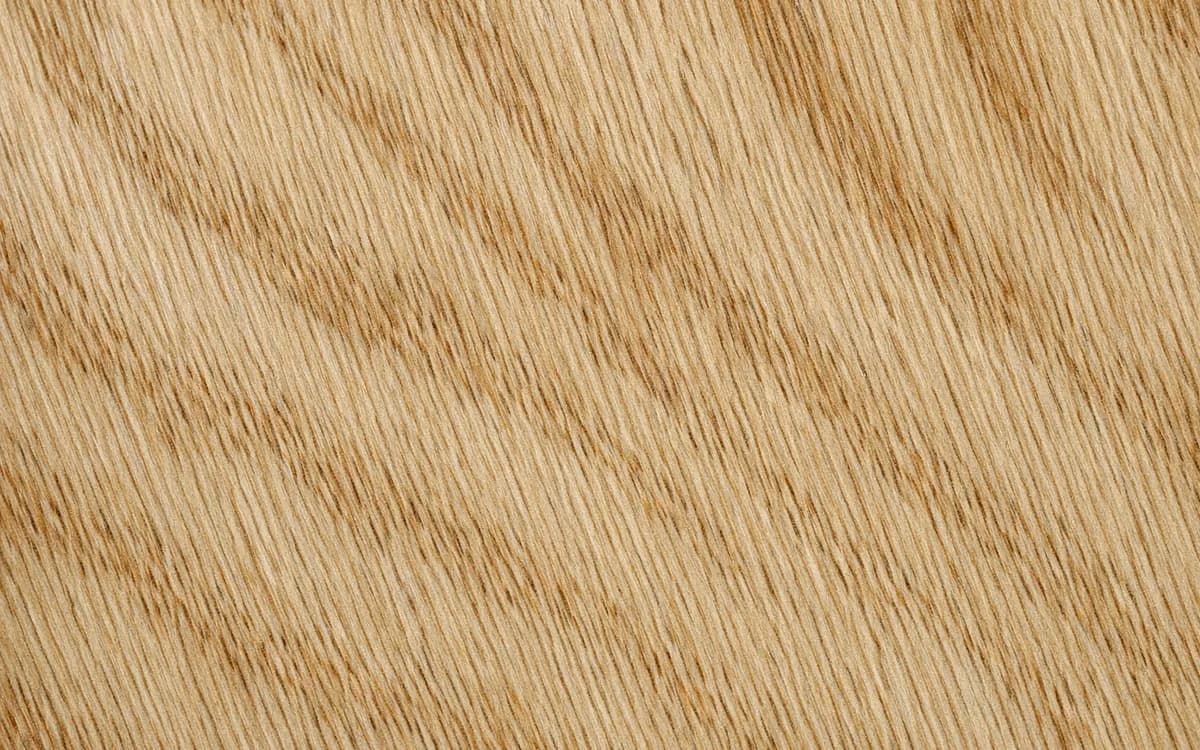
White oak (Quercus alba) and European oak (Quercus robur and Quercus petraea) are close botanical relatives, and both dominate premium flooring supply in their respective regions. The confusion starts because both are simply labelled “oak” on many showroom samples.
The practical differences show up in colour, grain figure, and how each species is typically milled and finished for flooring — not in a dramatic hardness gap.
Colour and grain
American white oak tends toward a warmer tan with a tighter, straighter grain. European oak often runs slightly paler with a more pronounced wavy figure and visible medullary ray fleck, especially in quarter-sawn boards.
Neither is objectively better — European oak is frequently chosen for a softer, more rustic character, while American white oak suits a cleaner, more uniform look. Wide-plank European oak in particular has become a signature look in contemporary European interiors.
Sourcing and typical formats
American white oak is widely available as solid strip and plank flooring, reflecting its dominant role in the US hardwood market. European oak is very often sold as engineered flooring with a real wood wear layer, which suits underfloor heating and wider plank widths without the movement risk of solid boards.
If your project involves underfloor heating or a concrete subfloor, check construction (solid vs engineered) before choosing a species — that decision usually matters more for performance than which oak you pick.
Finish and colour treatment
European oak is frequently finished with hardwax oil, giving a matte, low-sheen surface that is easy to spot-repair. American white oak is commonly finished with site-applied or factory polyurethane, which is more resistant to daily wear but harder to touch up locally.
Both accept UV-oxidised or fumed finishes that shift the base tone toward grey or deeper brown — useful if you want to move away from the classic honey-oak look.
Which to choose
Choose American white oak for a straighter, more uniform grain and wide availability in solid formats. Choose European oak for a softer, wavier figure, common engineered wide-plank options, and an easy match with matte oiled finishes.
Order physical samples of both under your room's actual lighting before deciding — photographs online consistently understate the tonal difference between the two.