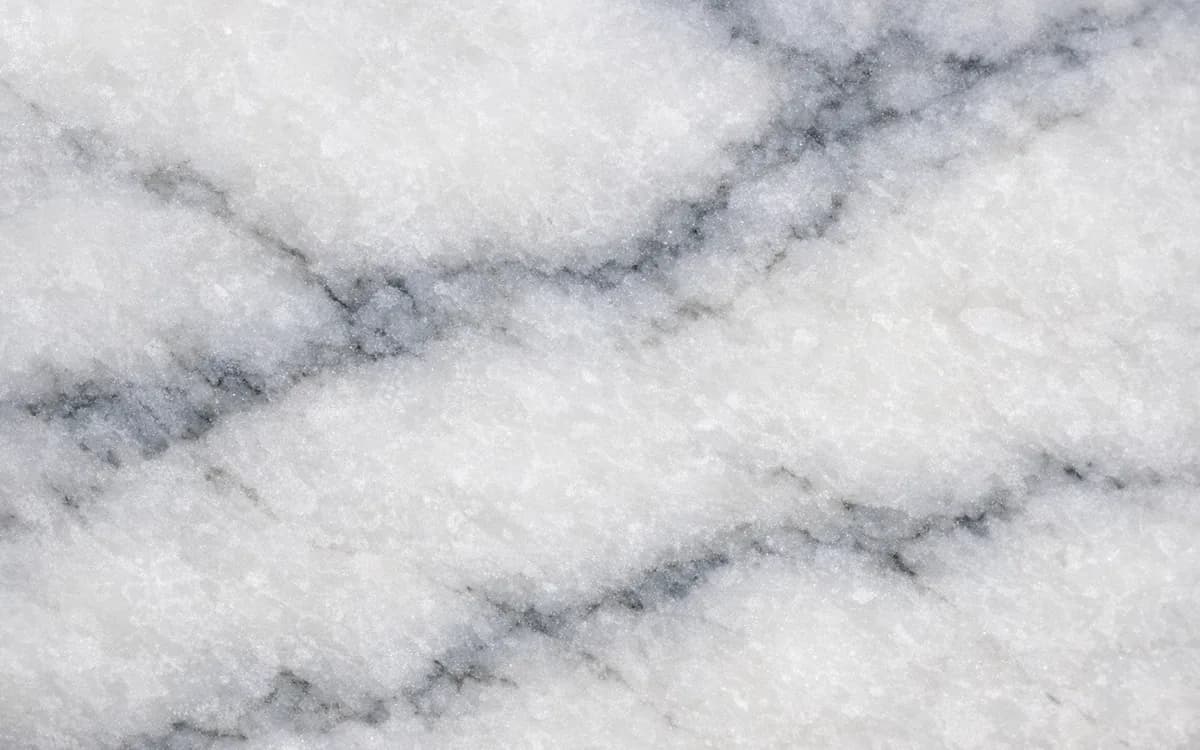
Marble quarrying today is engineering on a hillside. Crews work in stepped benches — horizontal ledges cut into the mountain — and use diamond wire saws or similar tools to release rectangular blocks with as little fracture as possible.
Each block is numbered, inspected for cracks and voids, and oriented so vein direction will suit the slabs or tiles it will become. Waste material becomes aggregate or fill; the valuable product is dimension stone.
Before cutting begins, geologists and quarry managers map fracture lines, colour zones, and structural weaknesses. A block that looks promising from the road may be rejected if internal fissures would shatter during sawing. That selection process is one reason two slabs with the same trade name can look and cost very differently.
Modern Italian operations in Carrara and similar districts combine centuries of local knowledge with GPS-guided planning, water recycling, and dust control. The image of workers with hammers and wedges still exists for small-scale extraction, but the slabs in most showrooms come from highly mechanised bench cuts.
How blocks are freed from the mountain
Diamond wire saws are the workhorse of many marble quarries. A steel cable embedded with industrial diamonds runs through a series of pulleys and cuts a channel around the intended block. Water cools the wire and carries away slurry. The process is slow but precise — far more controlled than blasting, which can create hidden fractures deep inside the stone.
Once the vertical and horizontal cuts meet, crews may insert air bags or gentle mechanical pressure to separate the block from the bench. A typical block for countertop production might measure two metres by one metre by one and a half metres, weighing many tonnes. Mobile cranes and loaders move it to a staging area for inspection.
Blocks are often photographed on all sides and tagged with quarry name, bench number, and date. Exporters use that traceability when shipping to processing plants in Italy, Turkey, China, or regional factories closer to the buyer.
From block to slab
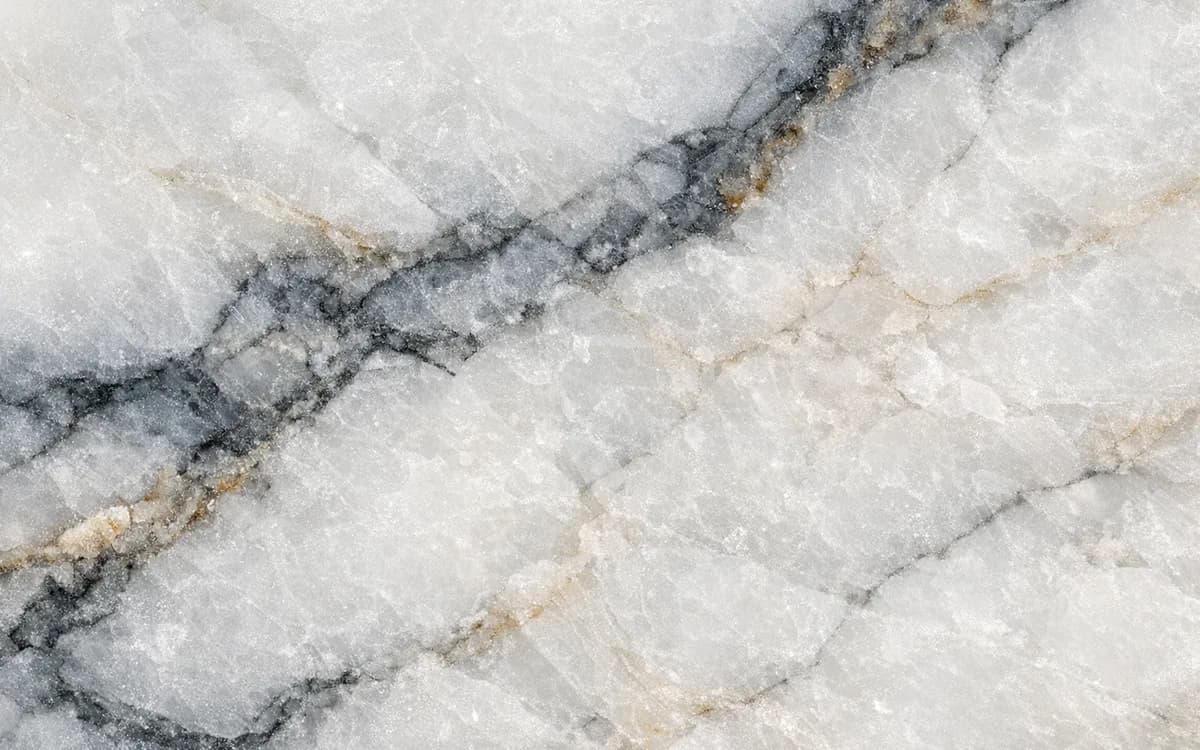
At processing plants, gangsaws or wire saws slice blocks into slabs — often 2 cm or 3 cm thick for countertops, thinner for cladding. Vulnerable areas may receive epoxy resin reinforcement with mesh backing.
Slabs then pass through polishing heads (for glossy finishes) or honing brushes (for matte surfaces). What arrives at your fabricator is already a finished face waiting for templating.
A gangsaw uses multiple steel blades to cut many slabs in one pass; wire saws offer flexibility for harder or more fragile stone. After sawing, slabs are washed, dried, and laid flat for resin treatment if needed. Hairline cracks and micro-voids are filled so the finished countertop does not trap dirt or weaken at the sink cut-out.
Polishing progresses through progressively finer abrasives — from rough grinding to final buffing. Honed finishes stop earlier, leaving a matte surface that many homeowners prefer in kitchens because fine scratches and etch marks are less obvious than on mirror polish.
From factory to your fabricator
Slabs are bundled — often with foam or plastic between faces — and shipped in containers or on A-frames by truck. Importers and stone distributors photograph bundles for customers who cannot visit in person. What you select online is still a real slab with natural variation; the photo is a record, not a guarantee of identical veining in your cut pieces.
Your local fabricator templates the kitchen, transfers the layout to the slab, and cuts with water-cooled bridge saws and CNC equipment where available. Edge profiles, sink holes, and cooktop openings are cut before installation. Understanding quarry-to-slab steps helps you ask better questions when a supplier quotes lead time or warns that vein matching will limit yield.
What buyers should verify
Ask where a slab was quarried and processed, especially when matching veining across multiple pieces. Bundle photos from the same block reduce mismatch risk on L-shaped kitchens.
Thickness, resin treatment, and finish affect both price and performance. The quarry story explains why two slabs with similar names can behave differently in your home.
Request thickness in millimetres (2 cm vs 3 cm is a common countertop choice) and confirm whether the price includes resin backing. Inspect slabs in person when possible: hold a sample of your cabinet colour against the stone under daylight and under artificial light — both reveal tone you will not see on a phone screen.
If sustainability matters to you, ask about water recycling at the quarry and transport distance. Short supply chains do not change marble’s geology, but they can affect cost and environmental footprint.