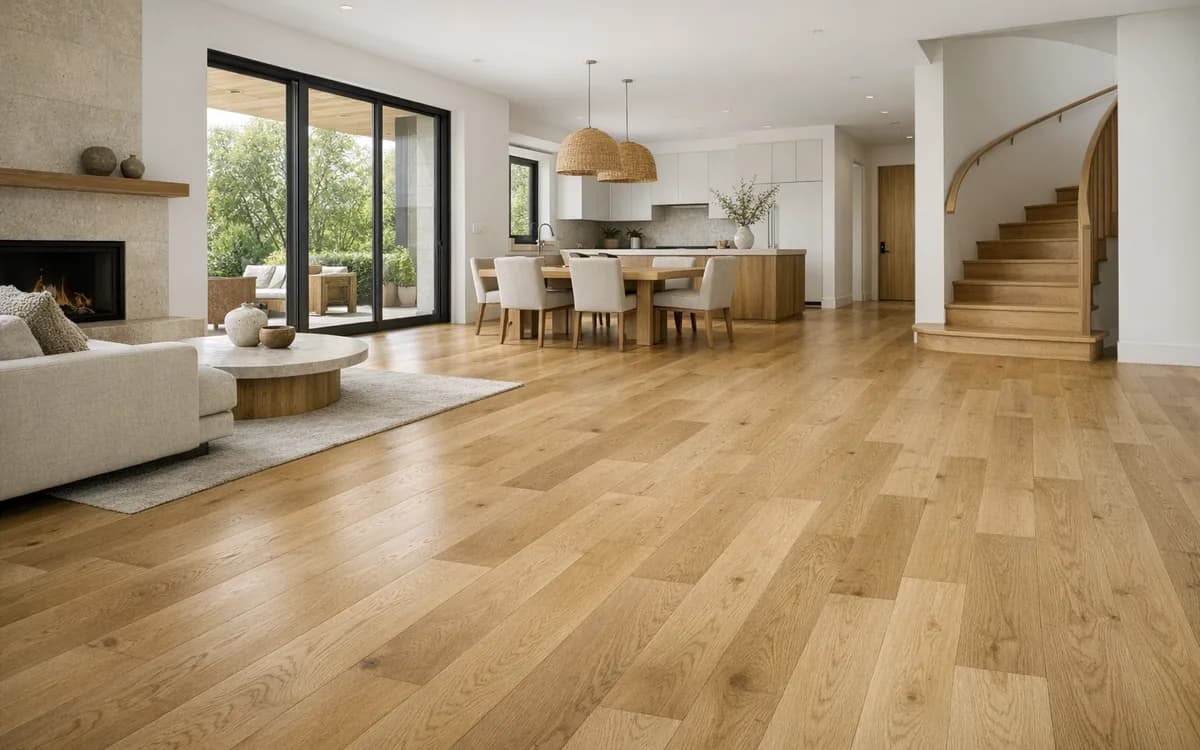
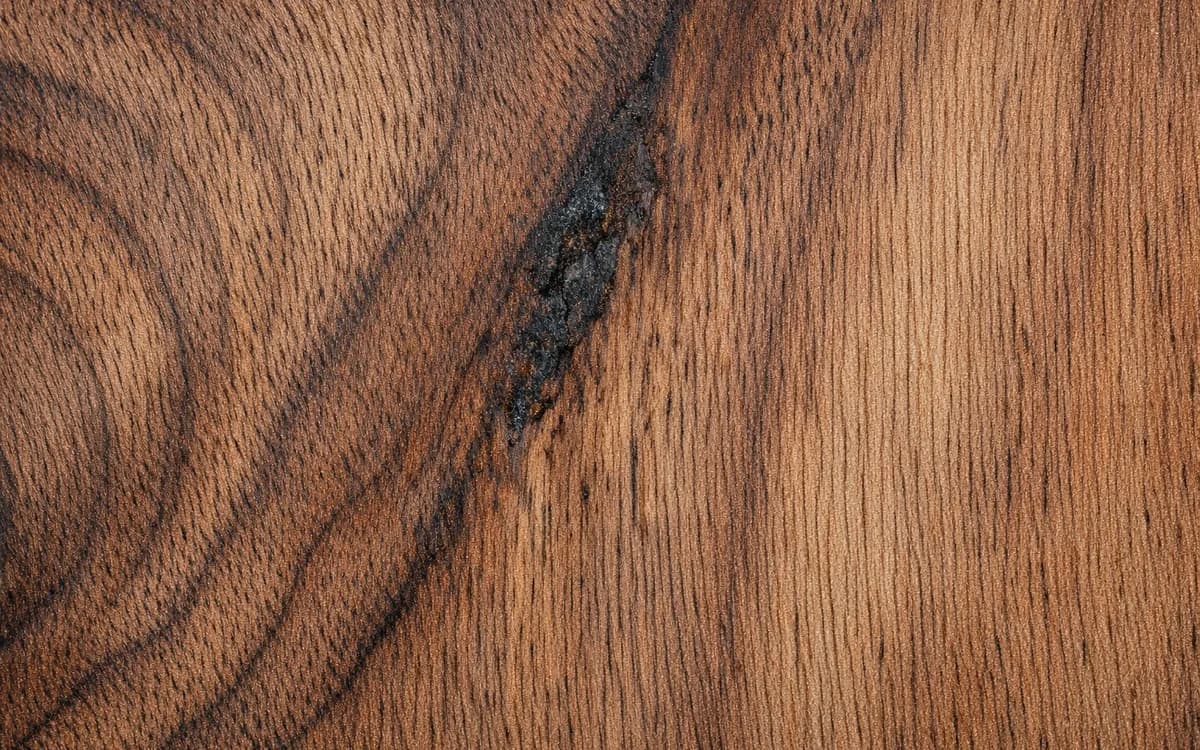
Oak and walnut are both premium hardwoods — but they are not interchangeable. White oak dominates modern flooring supply chains; American black walnut is chosen for depth of colour and grain character.
Compare species alongside construction (solid vs engineered), wear layer thickness, and finish system. The word “hardwood” does not mean identical dent resistance.
Hardness and daily wear
On the Janka hardness scale — an industry reference for dent resistance — white oak is commonly listed around 1,360 lbf and black walnut around 1,010 lbf. Oak generally resists dents from heels, chair legs, and pet claws better than walnut.
In a quiet bedroom, walnut may look perfect for decades. In a busy hallway with dogs and stiletto heels, oak often ages more gracefully.
Colour and grain
White oak accepts grey, natural, and medium stains well and suits Scandinavian, transitional, and contemporary interiors. Walnut brings inherent chocolate-brown tones — fewer stains needed, but less flexibility if you change cabinet colours later.
Quarter-sawn oak shows ray fleck; walnut shows flowing dark grain. Both can be stunning — the question is which story your floor should tell.
Cost and sourcing
Oak is typically more available and often less expensive at equivalent quality grades. Walnut premiums reflect demand and slower-growing supply for wide clear boards.
Engineered walnut with a thick wear layer can be a smart compromise in apartments with height limits or over underfloor heating — verify manufacturer specs for your subfloor.