Most residential marble sealers are penetrating (impregnating) products. They enter open pores and repel water and oil for a period. They do not create a thick plastic coat, and they do not stop etching from lemon, vinegar, or many household sprays.
Think of sealing as stain insurance, not damage immunity. Daily habits still dominate outcomes.
Topical coatings exist — films that sit on the surface — but they are less common for kitchen countertops than impregnators. They can change appearance and may need professional removal before refinishing. Most stone suppliers recommend penetrating sealers for residential marble.
Factory-applied resin during slab processing fills micro-fissures in the stone itself. That is not the same as homeowner sealing, but it affects how porous your slab feels in daily use.
When to seal
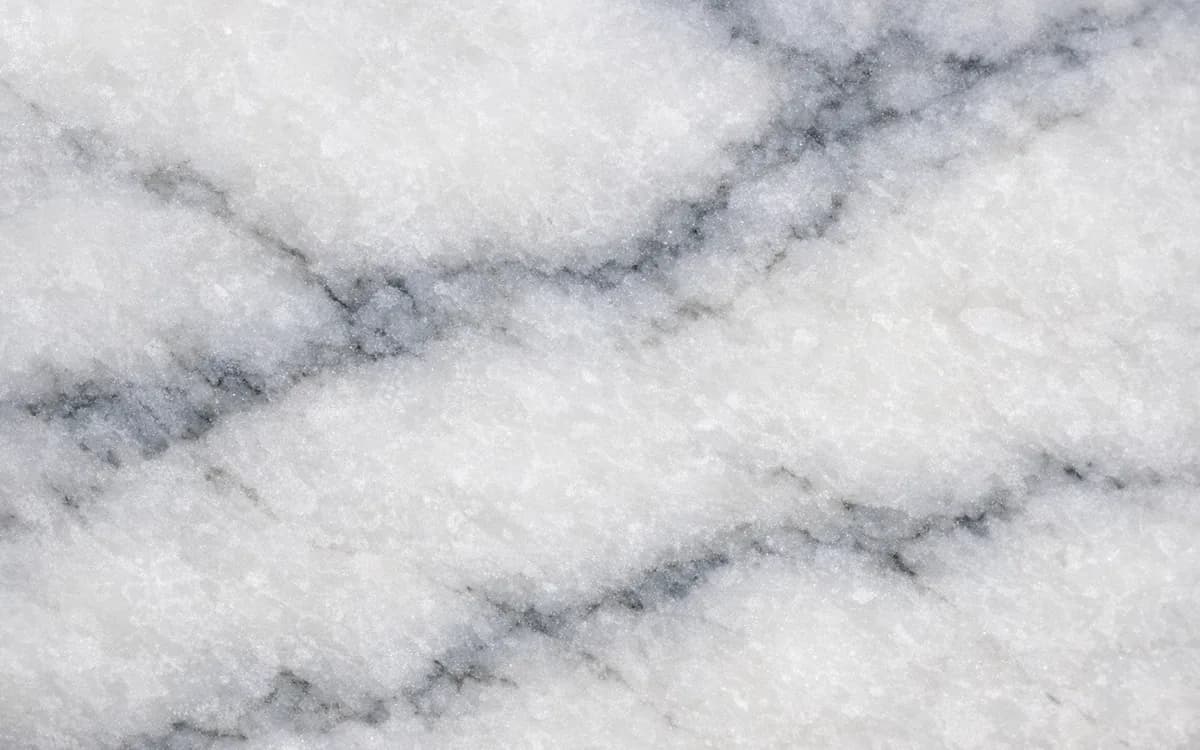
New honed marble in kitchens and bathrooms usually benefits from sealing after installation once surfaces are clean and dry. Polished marble may absorb less — still test rather than assume.
Re-seal when water darkens the stone quickly or when oil spots become harder to wipe away. Intervals vary by porosity, finish, and use — not by a universal calendar printed on a bottle.
The water-drop test is simple: place a few drops on honed marble. If they absorb within a few minutes and leave a dark mark when wiped, sealer has worn off in that zone. If water beads for twenty minutes or more, sealing may still be effective.
High-use zones around sinks and coffee stations often need reapplication sooner than a formal dining bathroom vanity that sees light traffic.
Application steps
Clean the surface with a pH-neutral stone cleaner and dry thoroughly. Apply sealer thinly and evenly as the manufacturer describes — usually wipe-on, wait, then wipe excess before it dries on the face.
Allow full cure time before heavy use, often 24 hours. Ventilate the room. Test in a low-visibility area first on multi-colour marbles to confirm no unwanted darkening.
Work in sections — countertop, then splashback — so you can wipe excess before it streaks. Two thin coats often outperform one heavy flood that leaves haze in porous zones.
On polished marble, excess sealer that dries on the face can look cloudy. If that happens, re-clean with the manufacturer’s recommended solvent or call a stone care professional rather than scrubbing with vinegar.
Sealing in bathrooms vs kitchens
Bathroom vanities see toothpaste, cosmetics, and hair products — many are mildly acidic or pigmented. Sealing helps, but wiping the basin area dry after use still matters.
Shower walls in marble are a separate conversation: water chemistry, soap residue, and ventilation affect performance. Many designers use marble on vanities and porcelain or glass in wet shower zones to reduce long-term maintenance.
Common mistakes
Over-application leaves sticky residue on polished faces. Using acidic “deep clean” products before sealing can etch the stone. Expecting sealer to replace cutting boards or trivets sets up disappointment.
If staining persists after proper sealing, the issue may be surface etching rather than absorption — sealing will not fix dull acid marks; professional honing might.
Mixing incompatible products — different sealer chemistries layered without stripping the old coat — can cause cloudiness. Stick with one product line unless a professional advises otherwise.
Sealing over dirty grout lines on marble tile floors traps grime. Clean thoroughly first, or hire a tile specialist for large format installations.