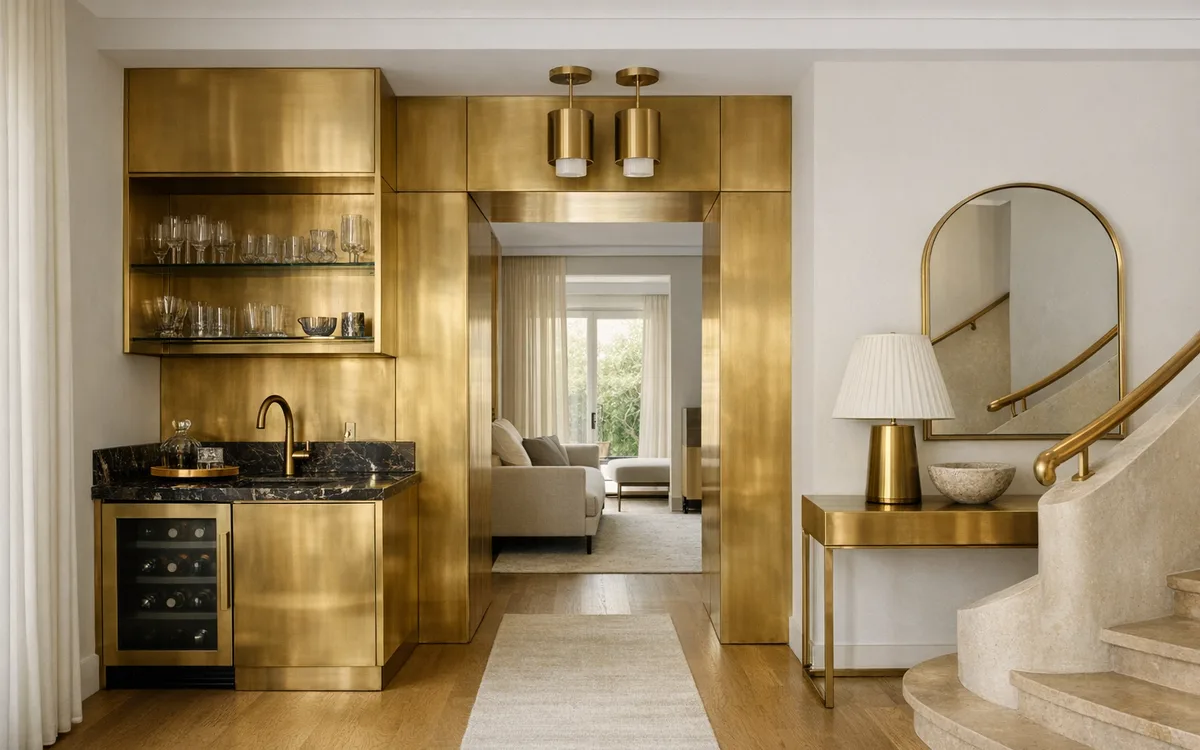
Unlacquered brass, copper, and bronze react with air, moisture, oils from hands, and cleaning products, gradually shifting from bright and shiny toward darker, warmer, or greener tones depending on the alloy and environment. This is oxidation, not damage — the same chemistry that turns copper roofs green over decades happens faster and less evenly on handled fixtures indoors.
Lacquered or clear-coated versions of the same metals resist this change for as long as the coating stays intact — once it wears through at contact points (a door handle, a faucet lever), a bright, un-aged patch appears next to darkened surrounding metal, which reads as damage rather than character.
Living finish vs sealed finish
If you want the fixture to look the same in five years as on day one, choose a lacquered or PVD (physical vapour deposition) finish — PVD in particular is significantly more durable than lacquer and commonly carries a manufacturer wear warranty. If you want the aged, varied look, choose an explicitly unlacquered "living finish" and expect uneven change based on handling frequency.
Mixing the two in one kitchen — a lacquered faucet next to an unlacquered cabinet pull — is common and fine, but be clear with suppliers about which each fixture is before buying, since it is not always obvious from a showroom sample under gallery lighting.
Cleaning without stripping the patina
For an intentional living finish, avoid brass or metal polish unless you want to reset it to bright and start the ageing process over — mild soap and water is usually sufficient for hygiene without disturbing the developing patina.