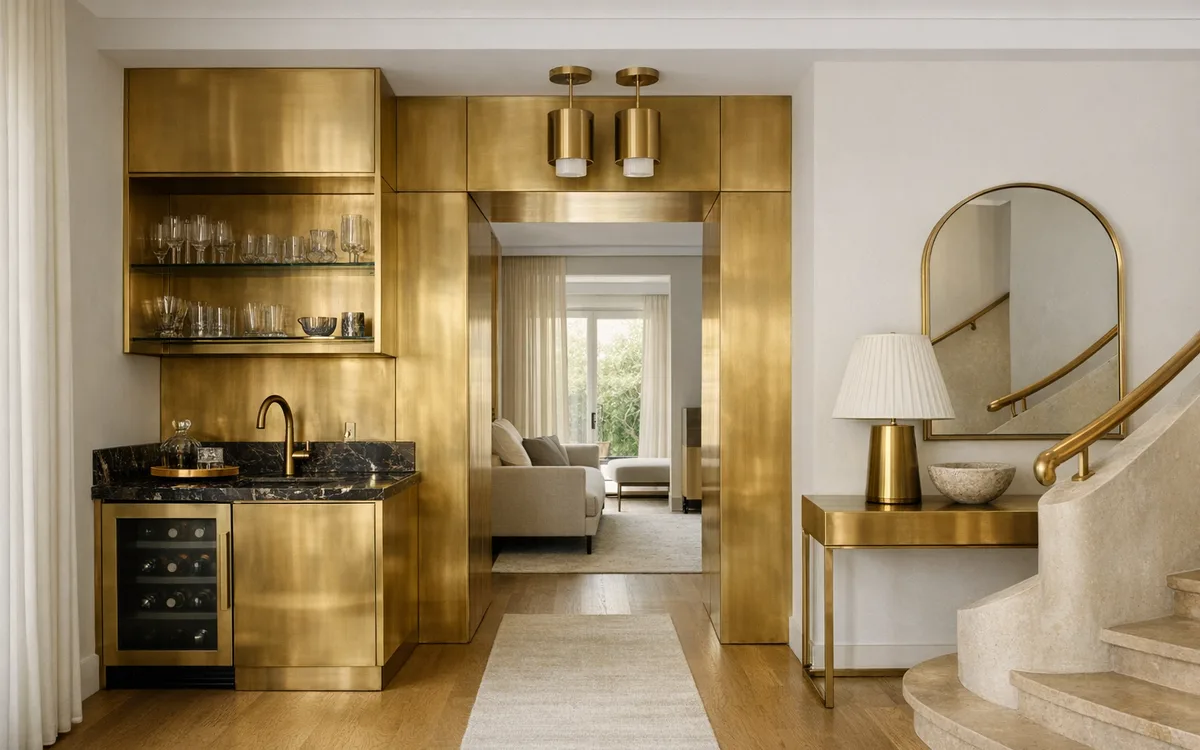
Brass (copper and zinc alloy) is warmer in tone and, when unlacquered, develops a living patina over years of use. Stainless steel (iron, chromium, and often nickel) resists corrosion and tarnishing far more consistently, staying visually stable for decades with basic cleaning.
Both are widely used for taps, handles, and hardware, but they solve different design goals: brass brings warmth and an evolving character; stainless steel brings a cool, consistent, low-drama finish.
Maintenance and durability
Lacquered brass needs gentle, non-abrasive cleaning to avoid scratching through the protective coating. Unlacquered brass needs almost no special care beyond acceptance of its changing colour. Stainless steel is generally the lowest-maintenance option of the two, resisting water spotting and fingerprints better in brushed finishes than in polished ones.
In coastal or high-humidity environments, verify the stainless steel grade (304 vs 316) — 316 offers meaningfully better corrosion resistance in salt air, which matters for exterior or near-coastal hardware.
Mixing metals in one room
Modern interiors increasingly mix brass fixtures with stainless steel appliances deliberately rather than trying to match every metal in a room — a shift away from the older "everything must match" convention. If mixing, keep at least one connecting element (like cabinet hardware) consistent across zones so the mix reads as intentional rather than accidental.